
scribbles_4 - 12/21/2025
Louis Delluc's Fièvre
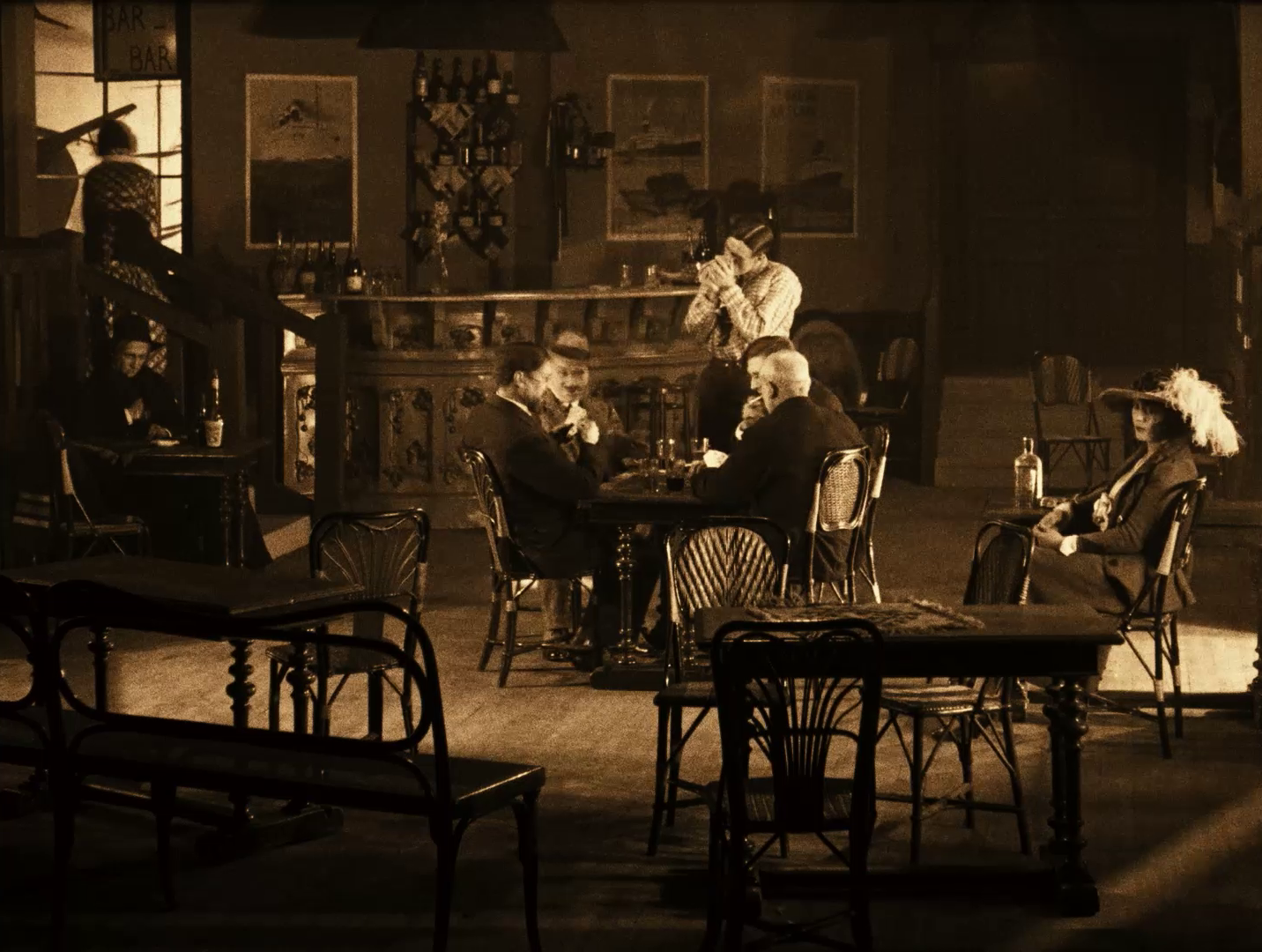
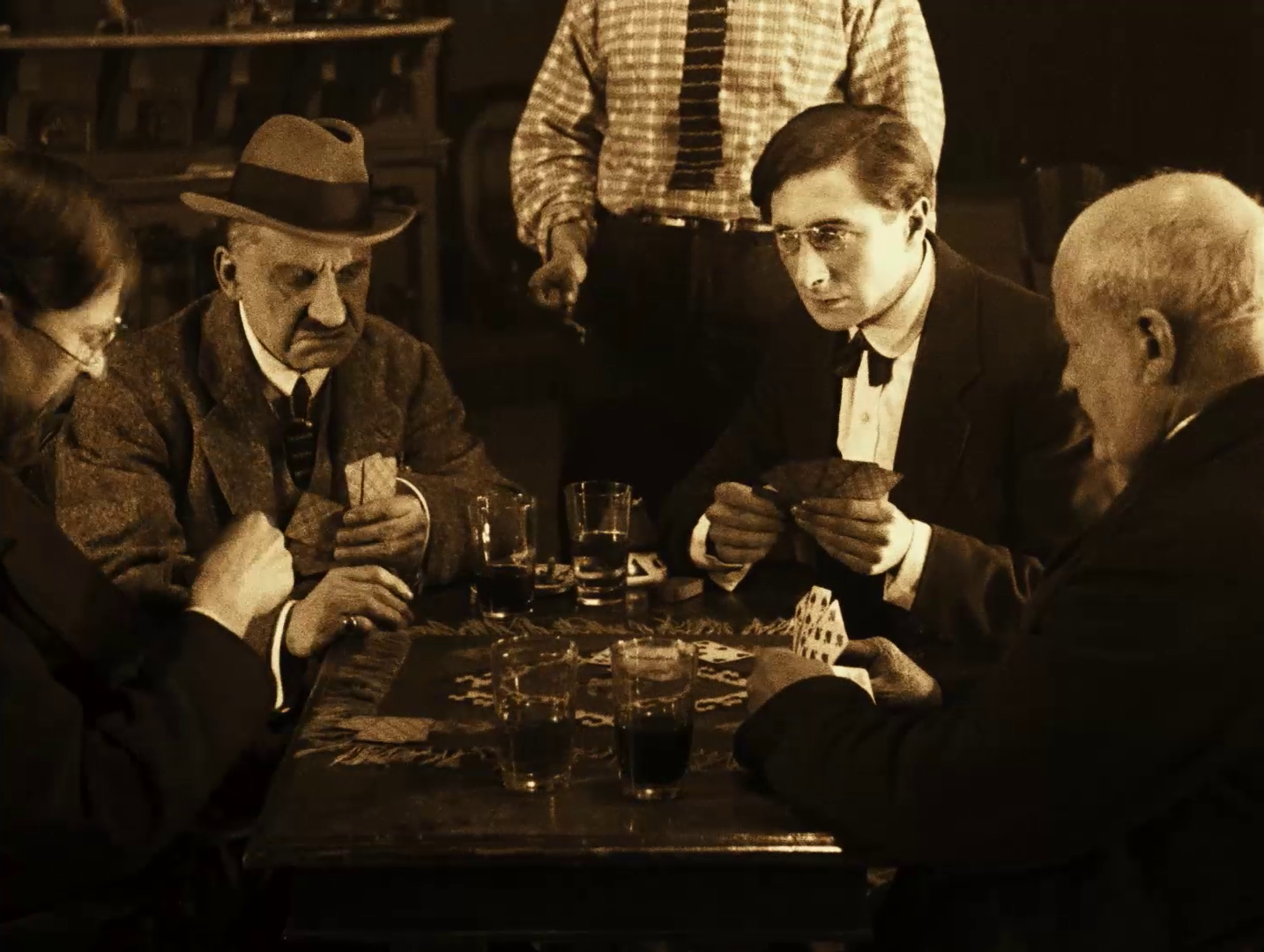
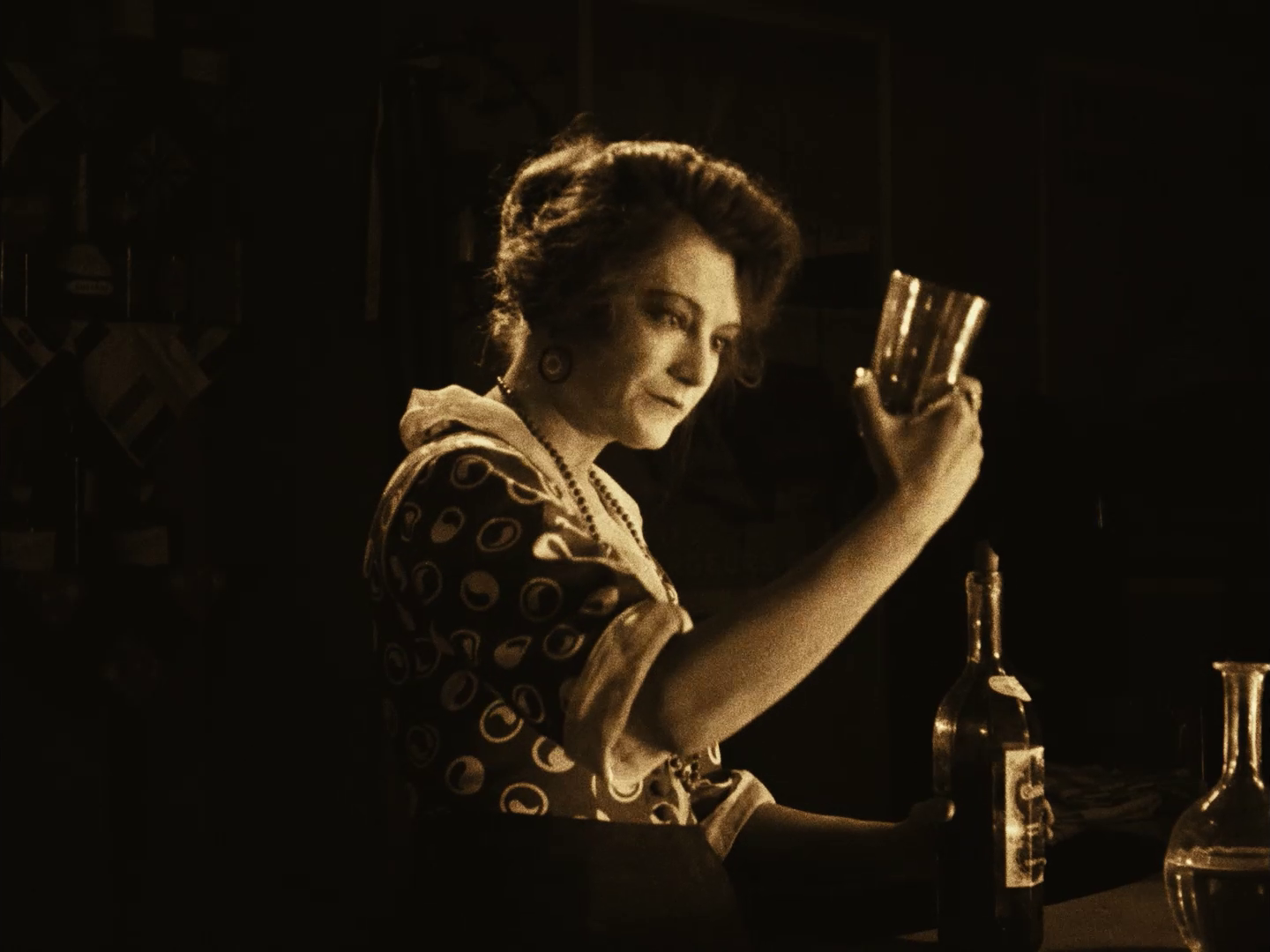
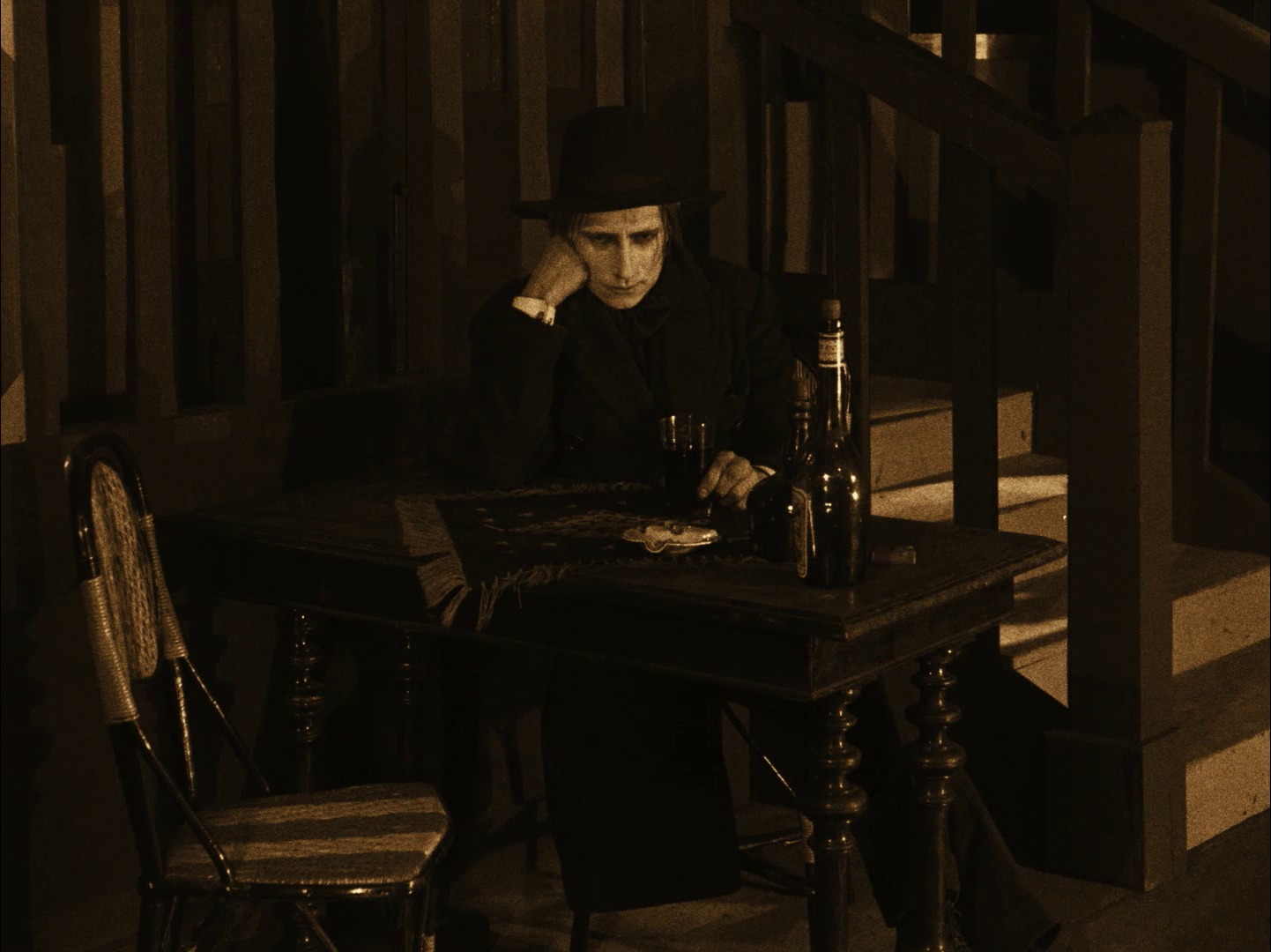
Today is like any other day at this large port town's cabaret. The same drab interior lighting, the same smell of cheap alcohol and tobacco filling the stuffy room, the same faces returning again and again. Among these frequenters are four gentlemen passing the time enjoying a game of trick-taking; a man and a woman on opposite sides of the room sit alone, lost in their own sorrows -- the man, dressed in all black, silently sipping his drink in his small corner, and the woman neurotically fidgeting with her pipe -- both waiting for something.... In the background is Sarah -- the bartender and the boss's wife -- who pours herself a drink to start this unexpectedly eventful evening, all while amusedly watching the patrons.
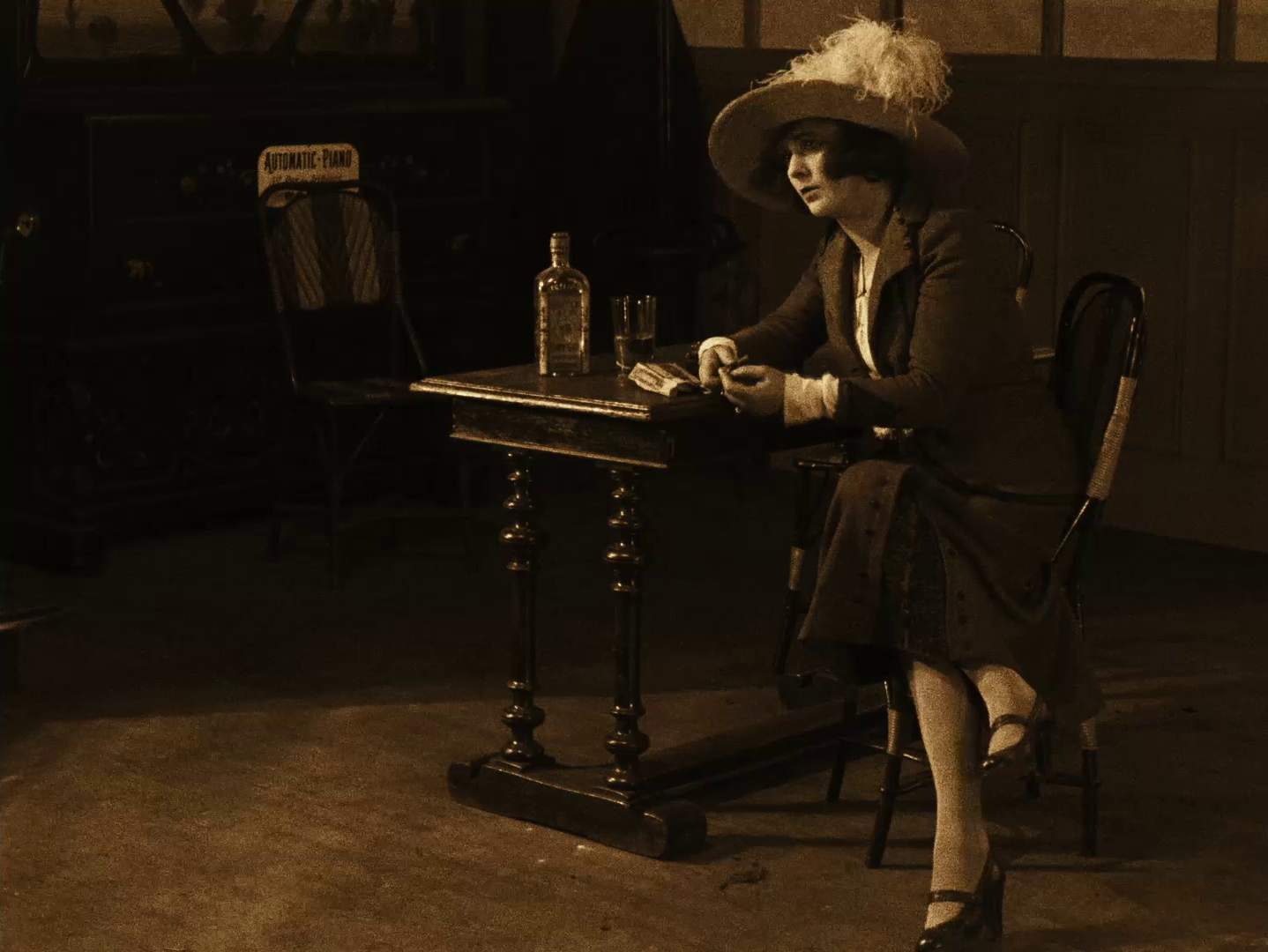
Sarah speaks to Herself
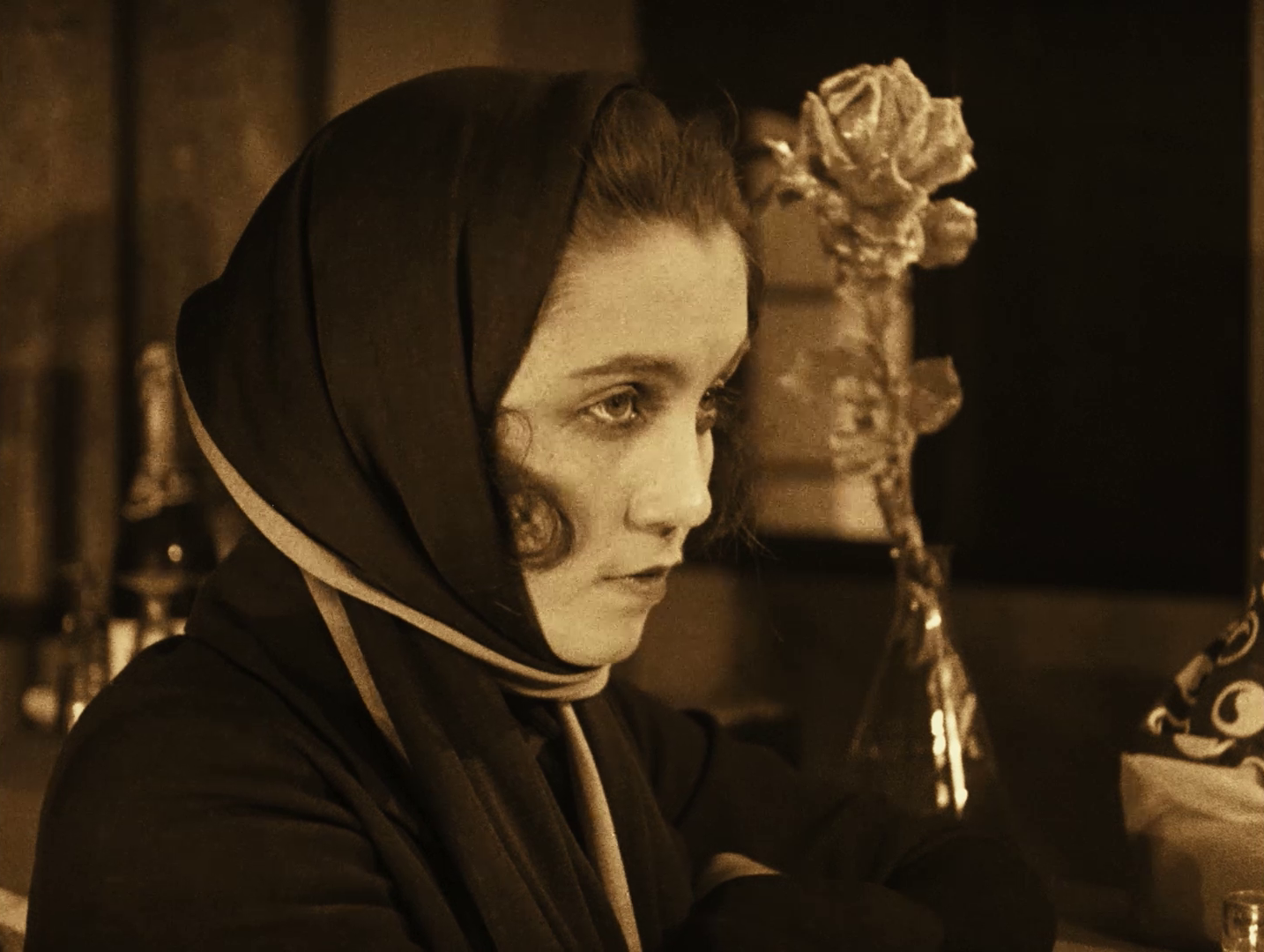
A young woman, Patience, also dressed in all black, enters and stands at the counter. She gazes into the distance across the room with her large sad eyes. All too familiar with this sight, Sarah immediately serves herself a shot of gin and asks her guest a question she already knows the answer to: "You're still waiting?"
Patience laments, with fading hope in her eyes, that they were in love and that he's gone back to the sea, but sure he'll eventually return. Sarah looks at Patience with the amused expression of a mother looking at her naive daughter and shares an identical story. Sarah, wise and cynical, flatly states her past lover will never return. Memories of his embrace come to mind.
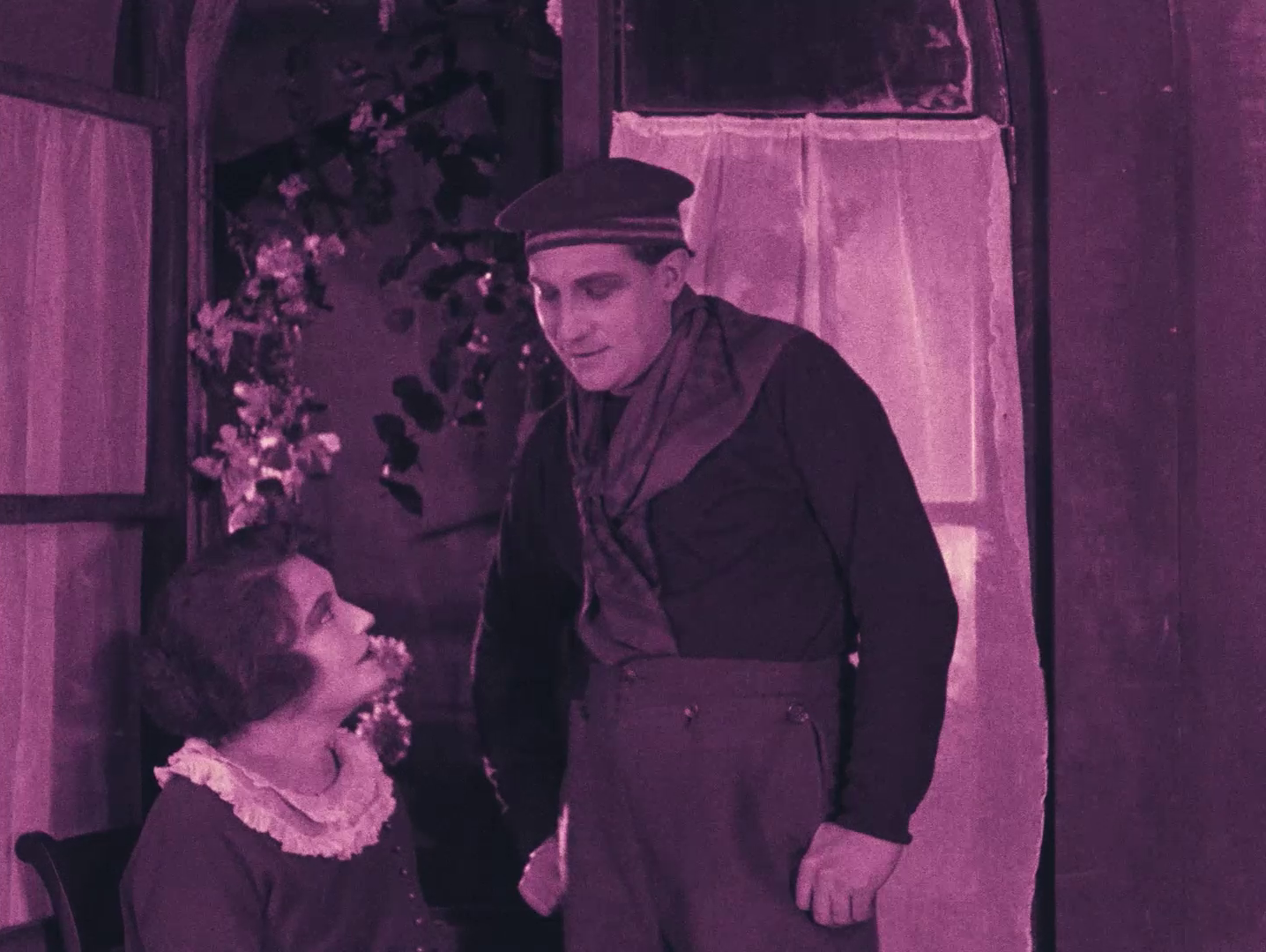
She goes on to say that he likely married in the East. Perhaps as a result of this realization, she gave up on hope and love and married as well. She glances at her husband across the room with an irritated expression, referring to him as "that one." Confident she can live up to her name, Patience claims she'll wait forever for her lover. However, it would seem it's easier said than done, as she pries a shot of gin from Sarah's hands and drinks it. Sarah jokingly accuses Patience of drinking too much. She quickly retorts that she only drinks to "enter the places where the sailors land ... People say I'm mad, no", I'm just waiting."
Seeing the futility in this exchange, Sarah laughs hysterically and walks away.
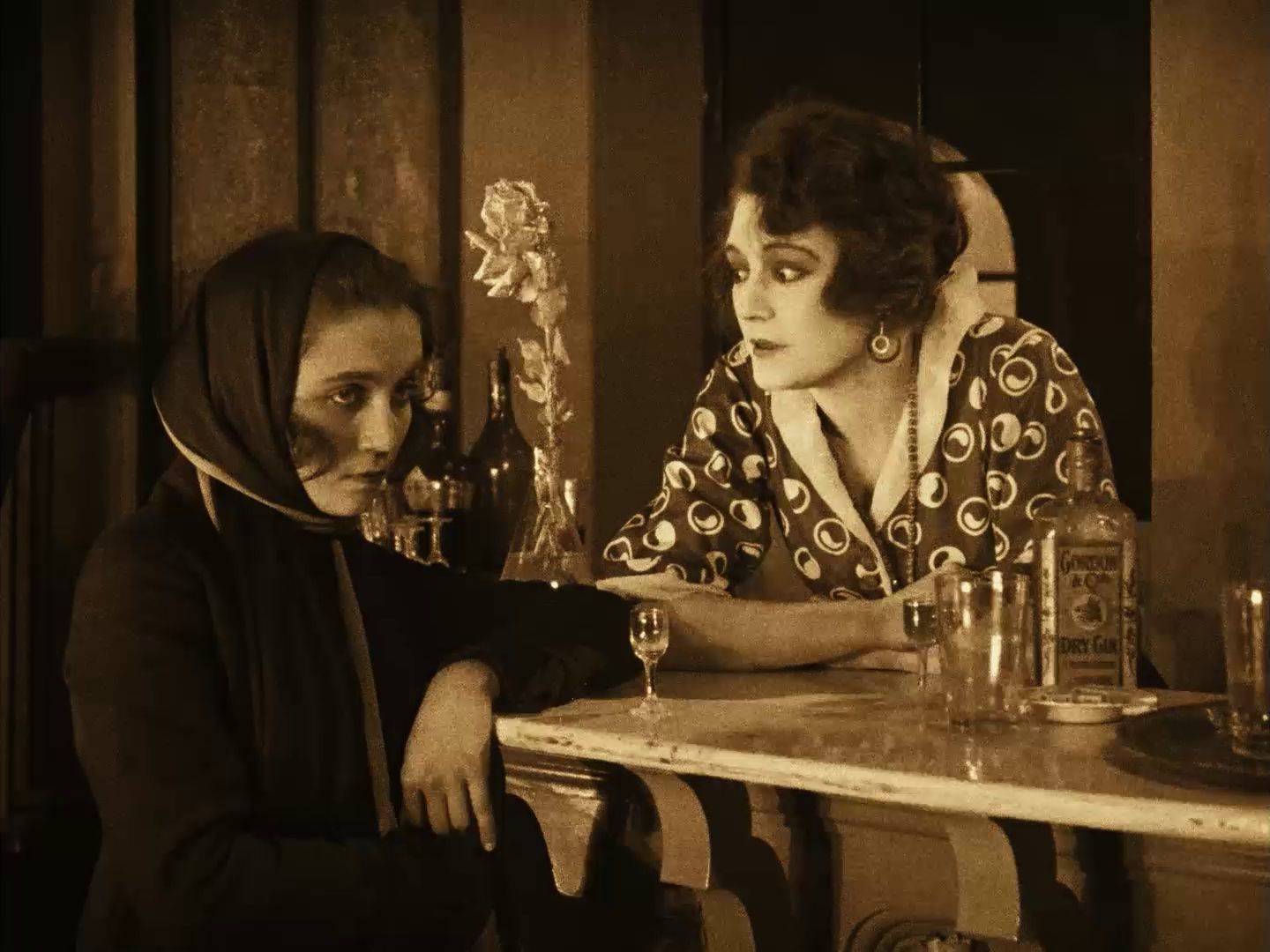
It's clear Sarah is what Patience will inevitably become -- having her heart broken when her lover never returns. She'll give up, she'll "settle" with a local man, all while secretly clinging to the fading memory of her past lover. She can never hope to escape it, as is the case with every first and youthful love cut short without proper closure. In Sarah's case, she remained in a port town and works in a bar where sailors are bound to visit. Was this by design? Was there always a lingering hope that they'd eventually be reuinted if she only waited long enough? Even if he never returned, this act would keep the memory of him alive. It's no coincidence that Patience has found herself here day after day. She's is in the same boat as the other lonely souls who've wandered into this establishment -- unable, or perhaps unwilling to escape, all holding on to something that they can't let go of. And so they drink and wait.
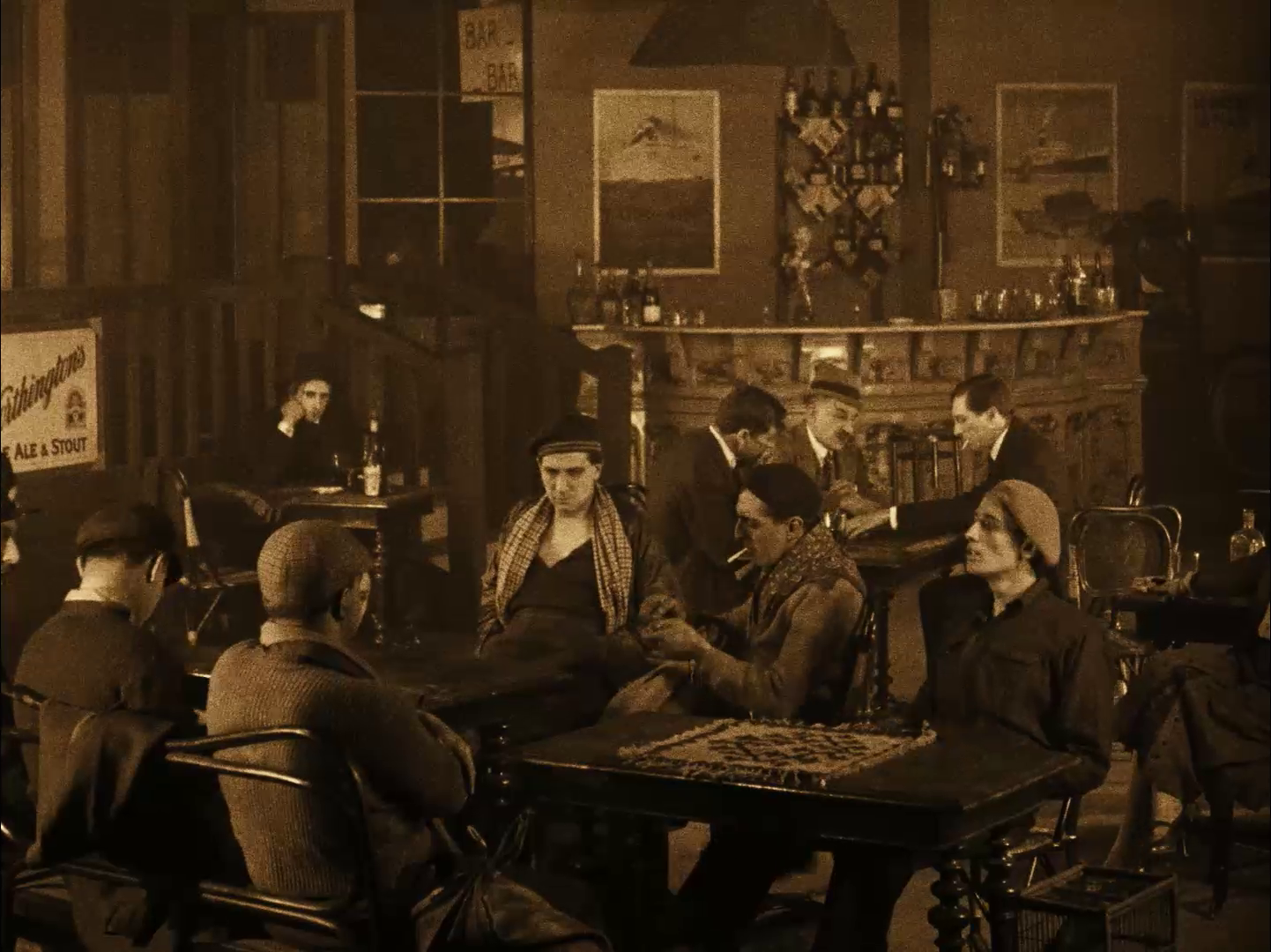
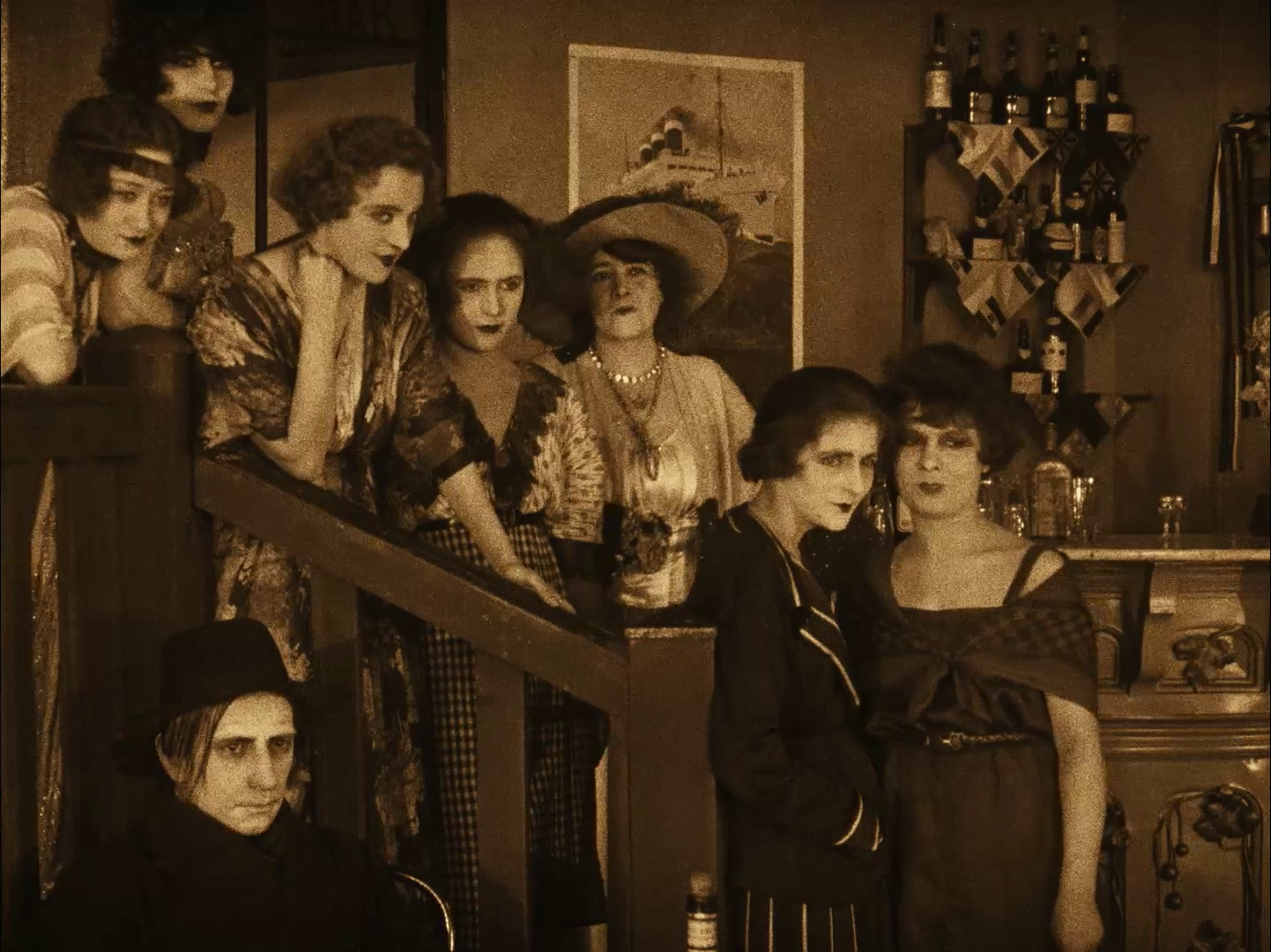
A whirlwind of sailors suddenly enters the cabaret. Patience carefully watches their arrival along with everyone else. Sarah's husband, the owner, hand-cranks the player piano as the men take their seats. They make themselves comfortable, lighting their cigarettes and talking among themselves. The cabaret's boss steps out and whistles loudly to get the attention of a group of local ladies (referred to as "The Women"), who step in shortly after wearing garish makeup and ostentatious attire. The film takes the time to introduce every prostitute and sailor back to back as they look to one another as if claiming their partners for the evening. The sole exception is Militis -- undoubtedly the group's boss -- who sits in the center, completely unconcerned, with hands deep in his pockets, a scarf loosely draped over his shoulders and revealing his chest in a worn-outm, low-cut shirt, like a thug standing on a dark street corner.
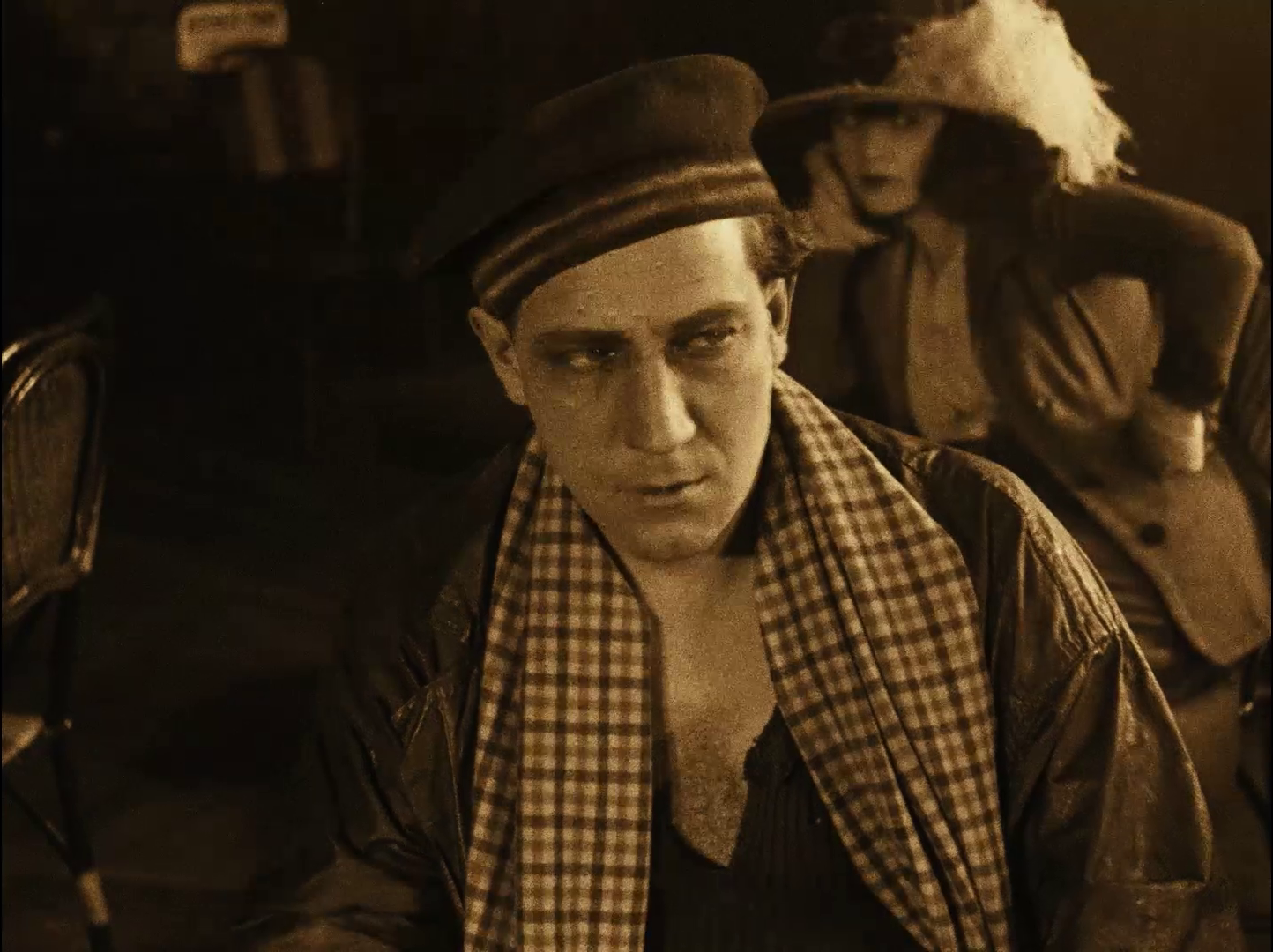
He takes a drag of his cigarette, looks at the women, and then back to his men with a devilish grin, as if giving them the go-ahead to have fun. The ladies quickly rush in and take their pick of men -- laughing at everything they say, being overtly fliratious and handsy, and sharing drinks. One of the men seems annoyed by the woman "assigned" to him, he shrugs off her advances and looks around the room. He catches sight of the Pipe Woman, who at first returns his fliratious looks, but a brief exchange puts a sudden end to it all. He returns his attention to his group, and she to her pipe, before sipping away her sorrows yet again. The sailors begin to entertain the ladies by showing off various souvenirs and mementos they brought with them from their travels to the East.
Sarah returns from her duties outside and is immediately tasked by her distrustful husband with attending to the loud party. She greets them with her bright smile and a couple of bottles of alcohol. One of them asking her to partake in the lively entertainment, handing her an Asian-styled parasol and a hand fan. She indulges them and plays the part of a young lady for their amusement before spotting the nearest sailor and leaning on him.
The Meeting
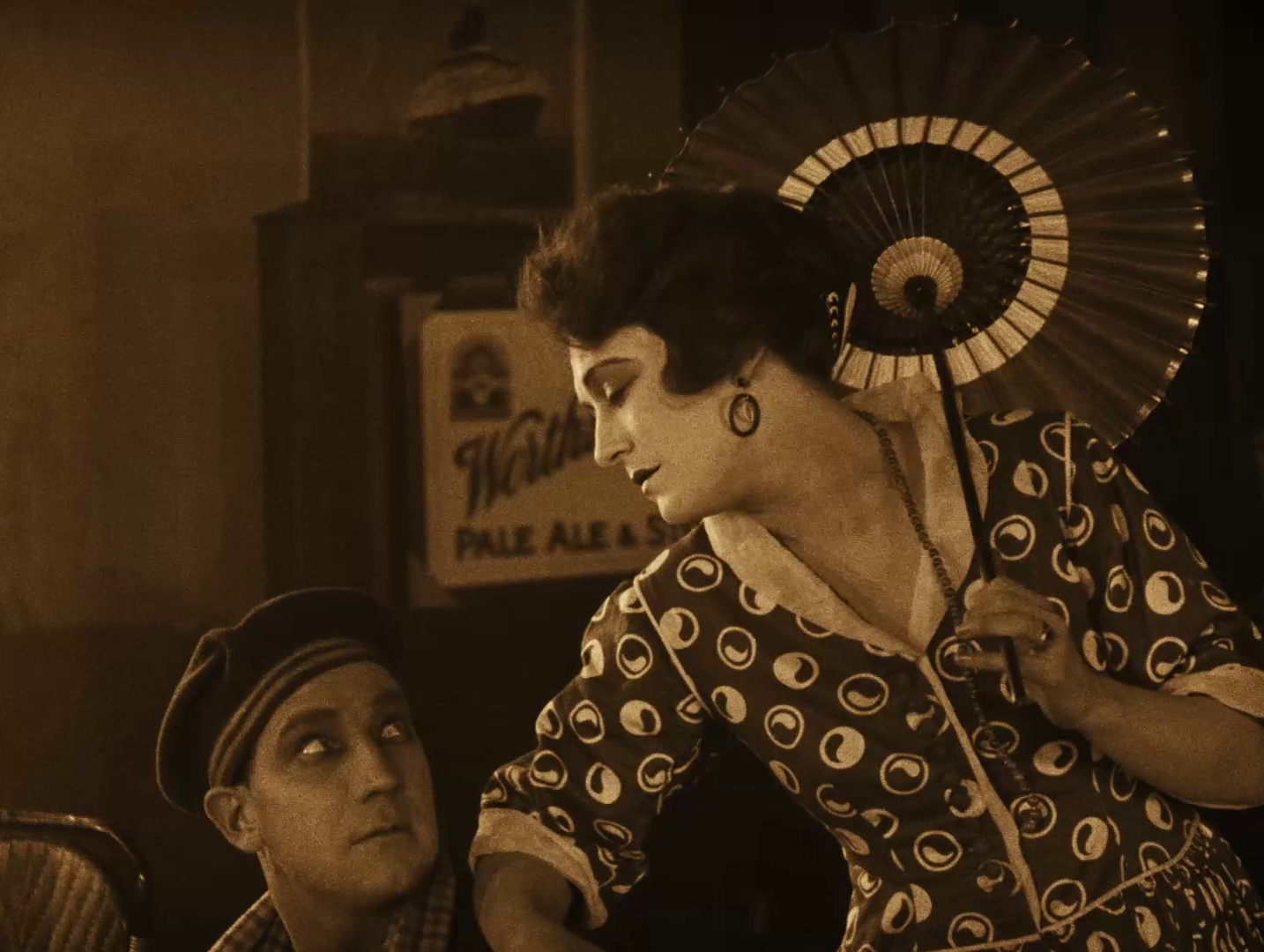
She looks down at him, Militis turns around to her, and they lock eyes. One glance and they came to the same realization: they are face to face with their old lover. Both look as if they've seen a ghost and slowly pull away, unable to escape each other's stare. In shock at finally seeing each other after countless years, neither knows what to say, or even having the courage to break the silence. What can even be said? They finally manage to break from the shared stare and retreat -- Militis back to the party, and Sarah to the counter, away from everyone, where she stares into nothingness and attempts to collect herself. The prostitutes turn their attention to Militis and asks what he to share. He turns to his side and says, rather uninterestedly, "This." We catch only a glimpse of a woman's profile behind one of the ladies as they all take an interest and begin to crowd around him. Sarah overhears in agony as Militis explains that he bought and married the young woman. It had only been mentioned in passing and very likely assumed on Sarah's part, but now it is finally confirmed.
If we recall a moment ago when Militis and Sarah first locked eyes, consider what Militis saw: his old lover now taking the form of his current one -- the two women becoming one as his past and present lives collide.
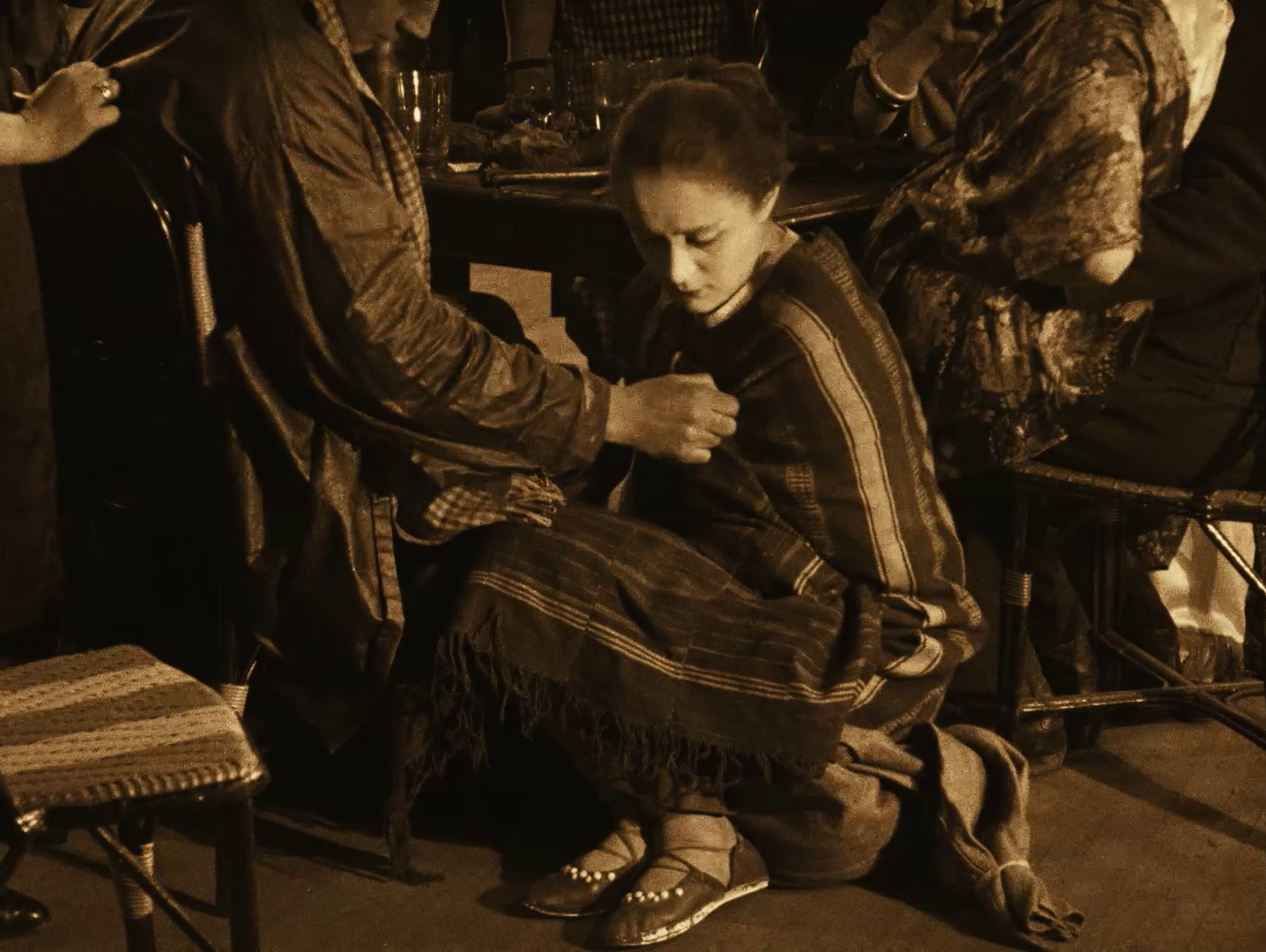
Not understanding anyone around her, Militis' shy and subservient wife finally looks up for once and turns her attention to the cabaret's familiar faces: the man in the dark clothes takes a brief look at her before returning to his drink; a couple of the card- playing men take a drink as well; and the Pipe Woman, having finally given up, removes her frilly hat meant to attract attention, leans back, stretches to take the enourmous weight off her shoulders, and finally collapses into her hand with an exhausted expression.
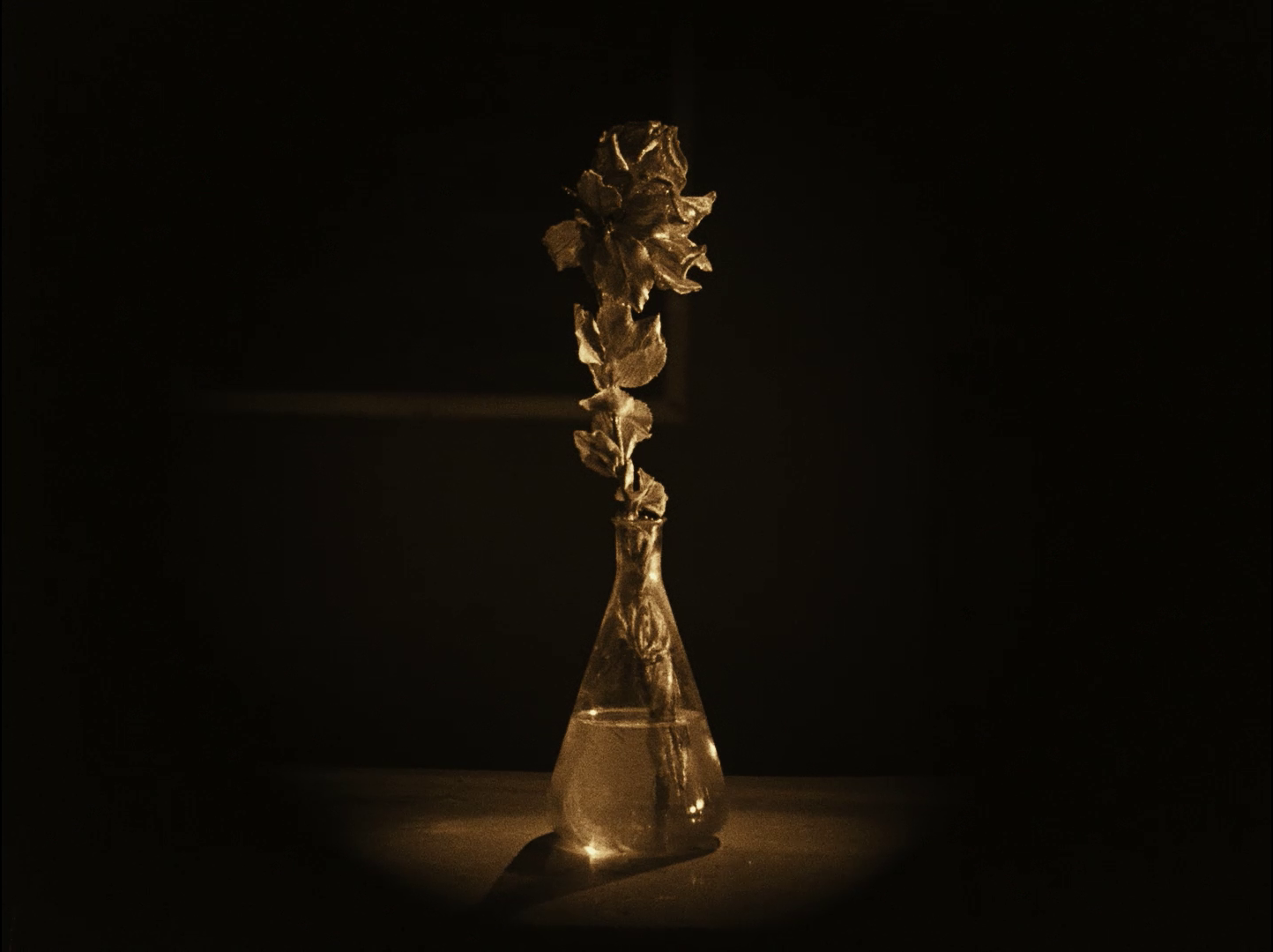
Militis' wife gives up on such unsightly faces and turns instead to something of remarkable beauty -- a shining, glittery flower in a vase. She breaks her silence, "What kind of flower is this?"
One by one, the sailors and their partners for the evening begin to dance, leaving only Militis sitting alone with a cigarette in his mouth and his wife on the floor by his side, like a pet. Sarah watches Militis from across the room in the far background. Eventually, she slips through the dancing crowd, slowly approaches him, and takes a seat by his side, aggressively bumping his shoulder.
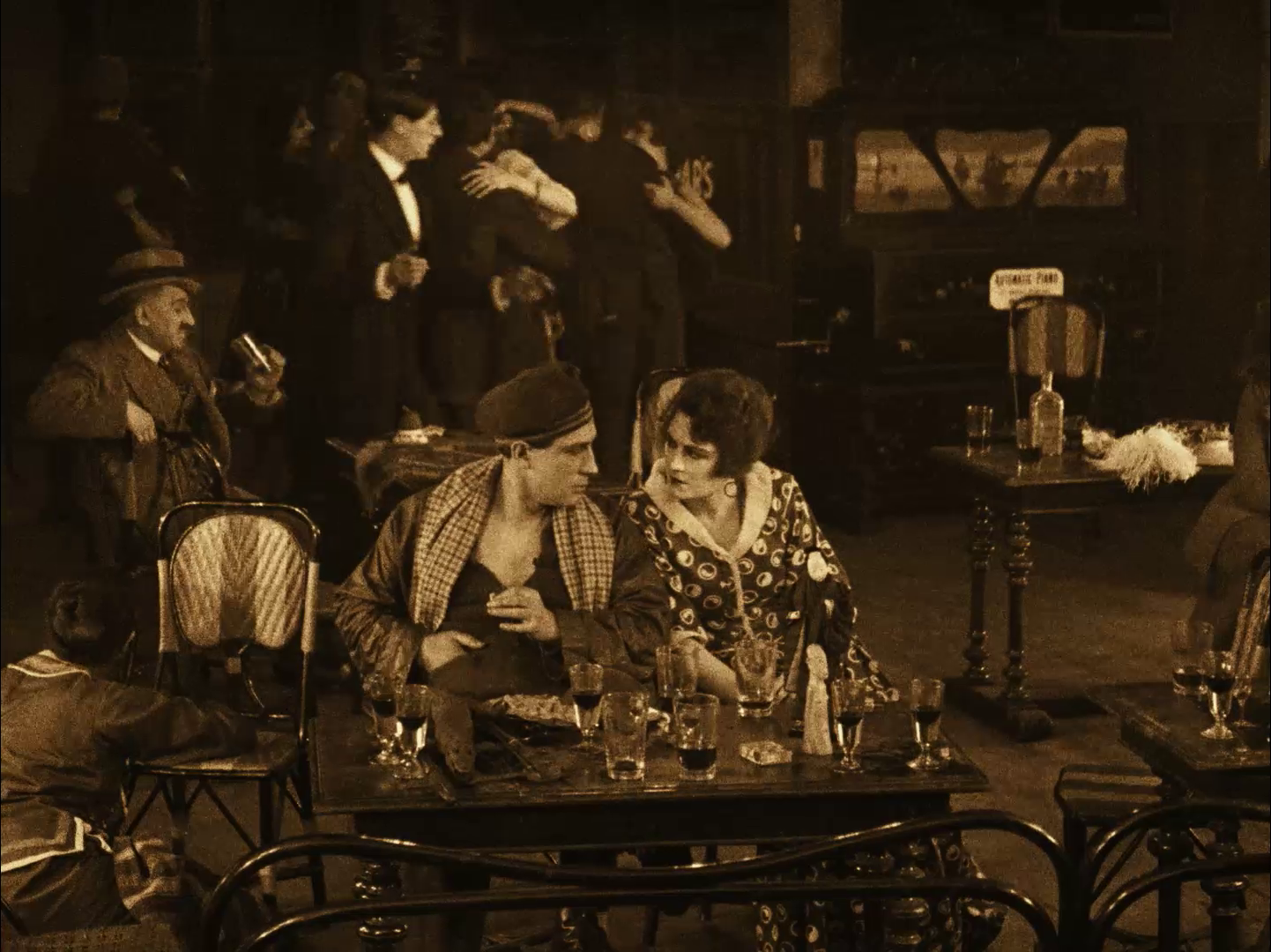
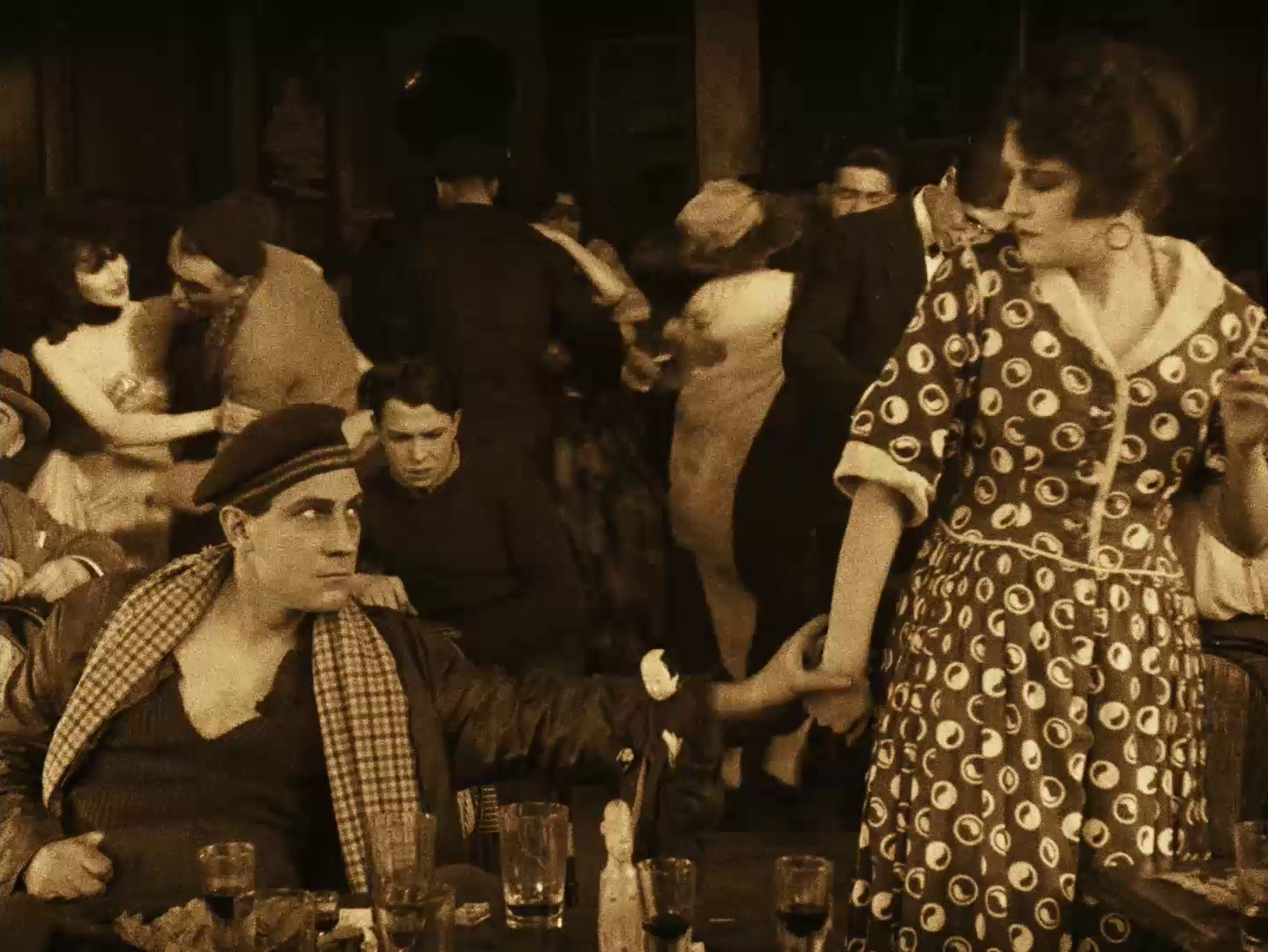
He turns to see her staring him down. "You just don't want to recognize me, Militis." Looking down at him, she stands up and attempts to walk away, but he suddenly grabs her wrist before she's out of reach and utters her name.
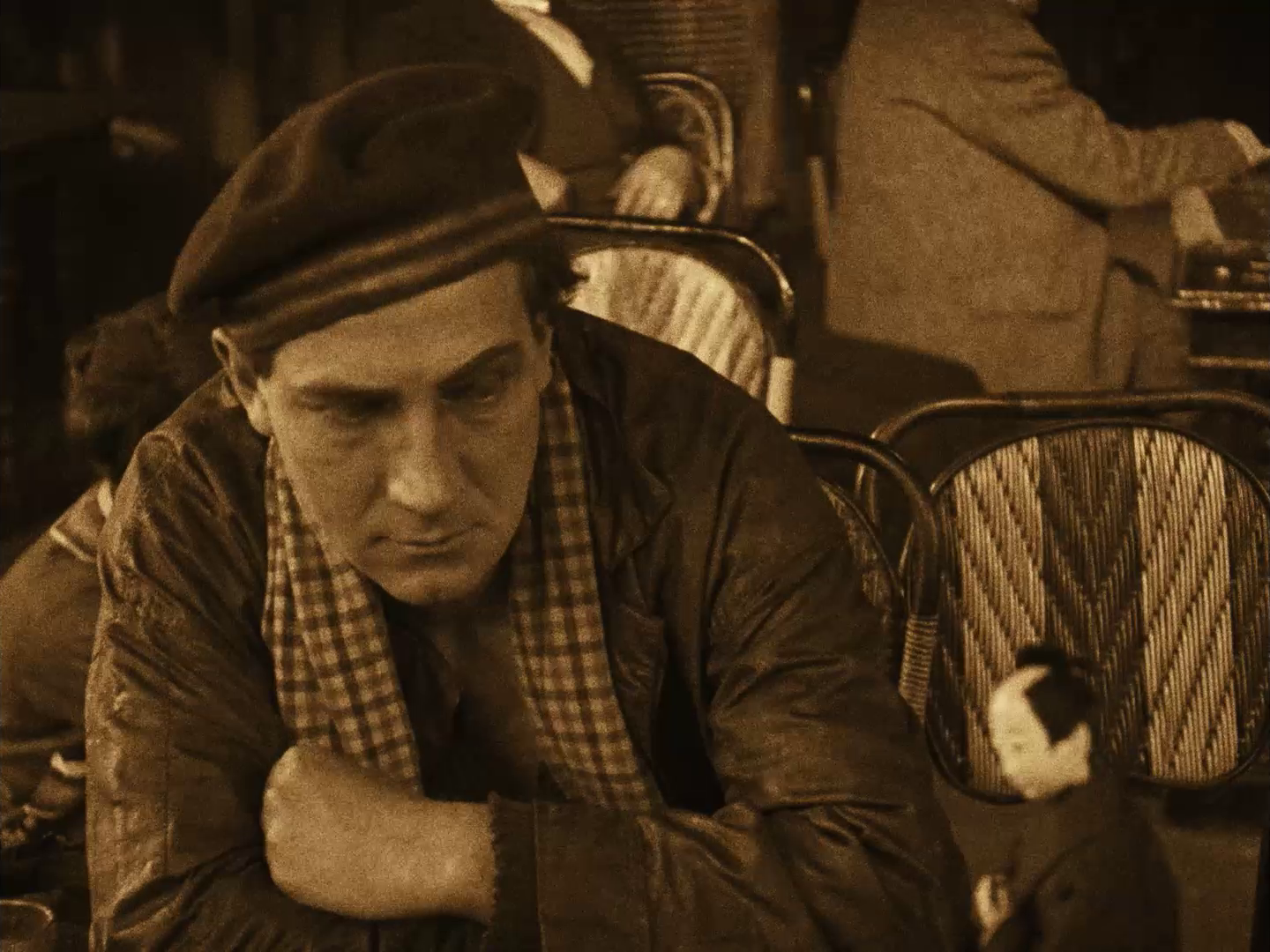
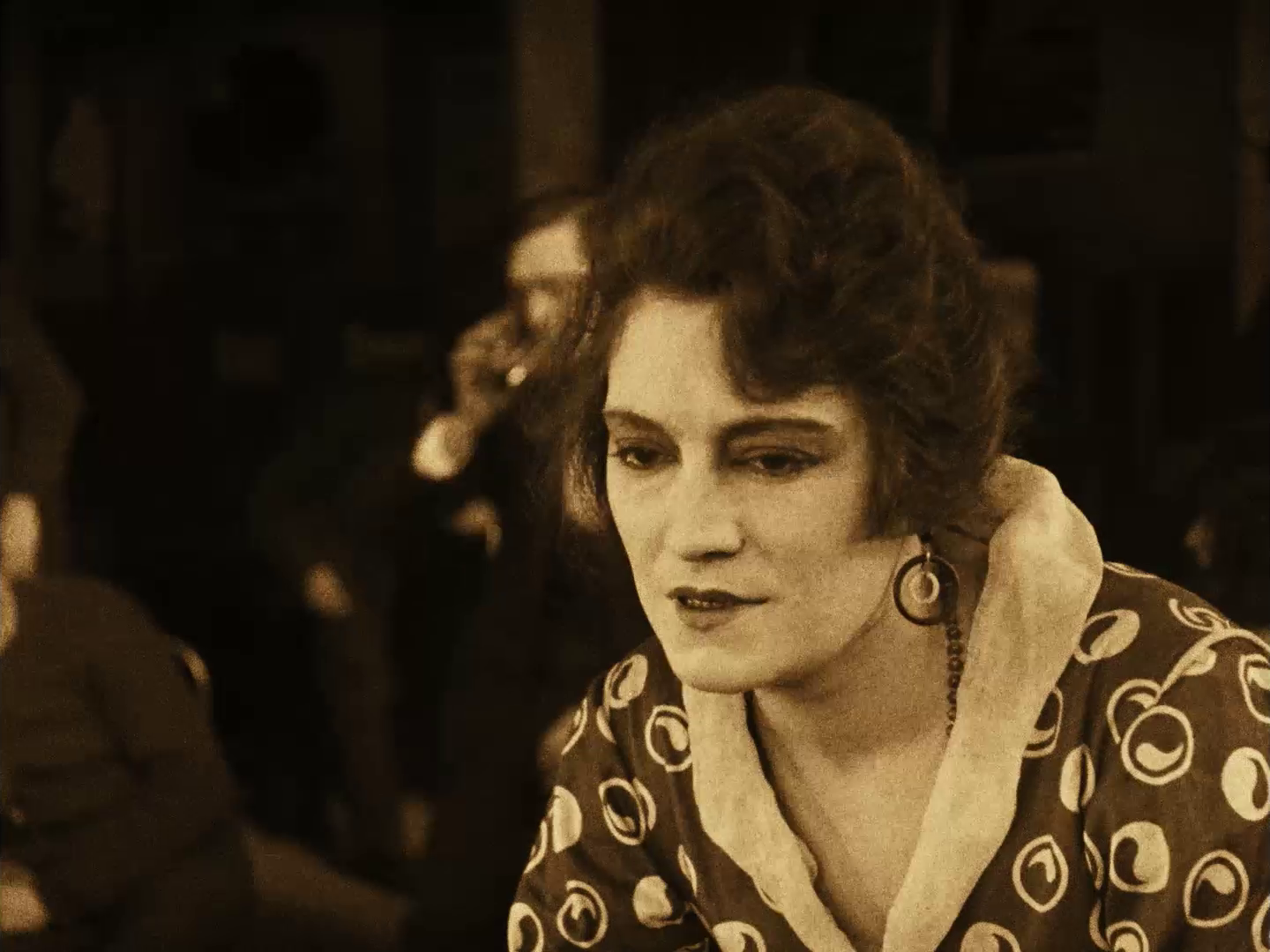
She surrenders almost immediately, sitting on the table beside him and staring deeply into his eyes. Perhaps unable to bring herself to say the words directly to his face, she looks away from him towards the camera: "...I've waited for you." Militis looks down at the table beneath him, but at nothing in particular. Lost in thought, he recalls the past.
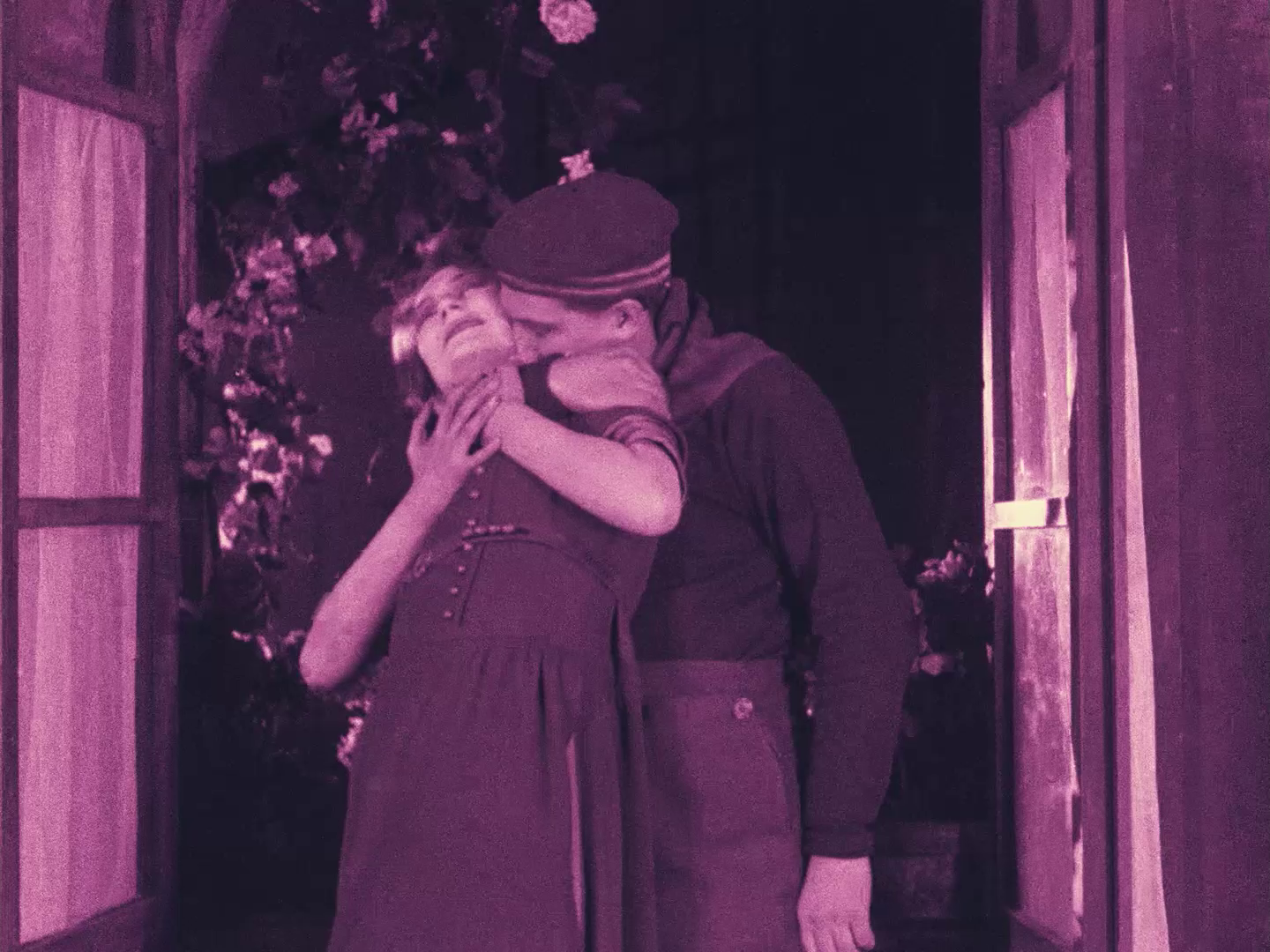
We see he shares the same memory of that night, perhaps their last, together -- we see an image of him sitting on a windowsill as Sarah looks out, he grabs her from behind and kisses her neck. They take turns explaining their circumstances and how they led to this moment. Sarah steps away and watches the dancing in the background. Militis turns to his wife and remembers how she cared for him while he was deathly ill, and how this is what lead to his marriage, revealing a bit more nuance beyond a purely transanctional relationship.
The Dance
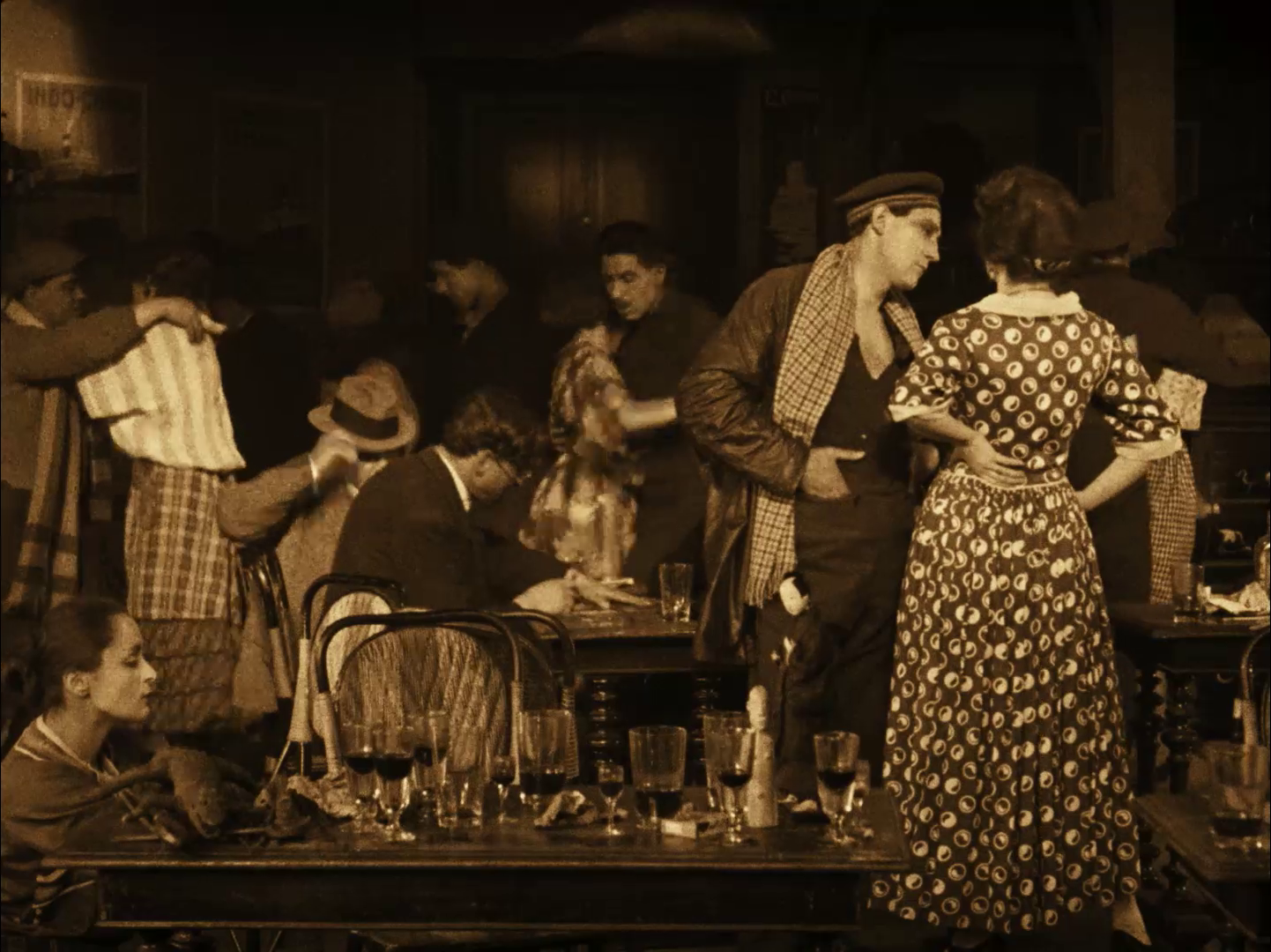
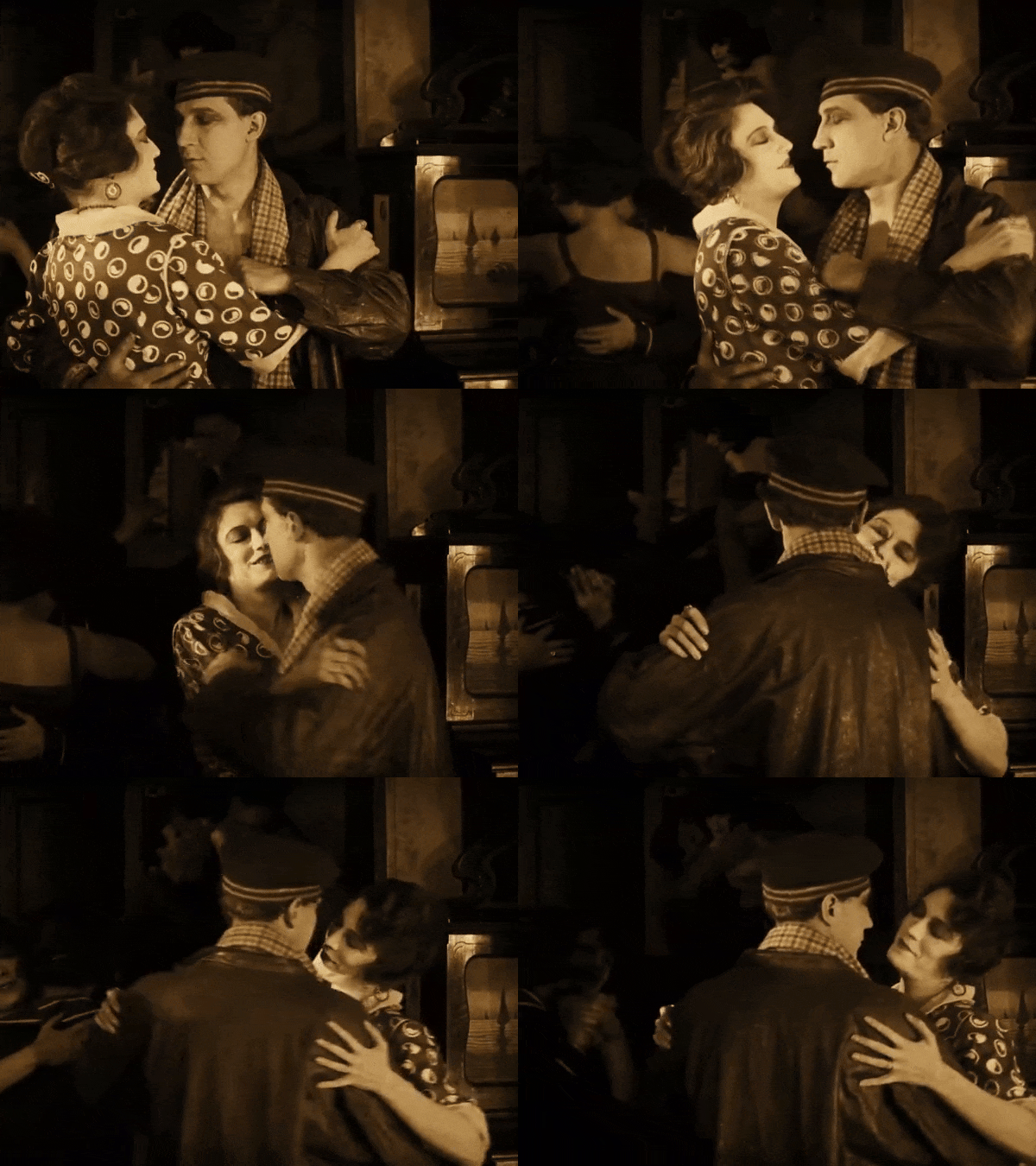
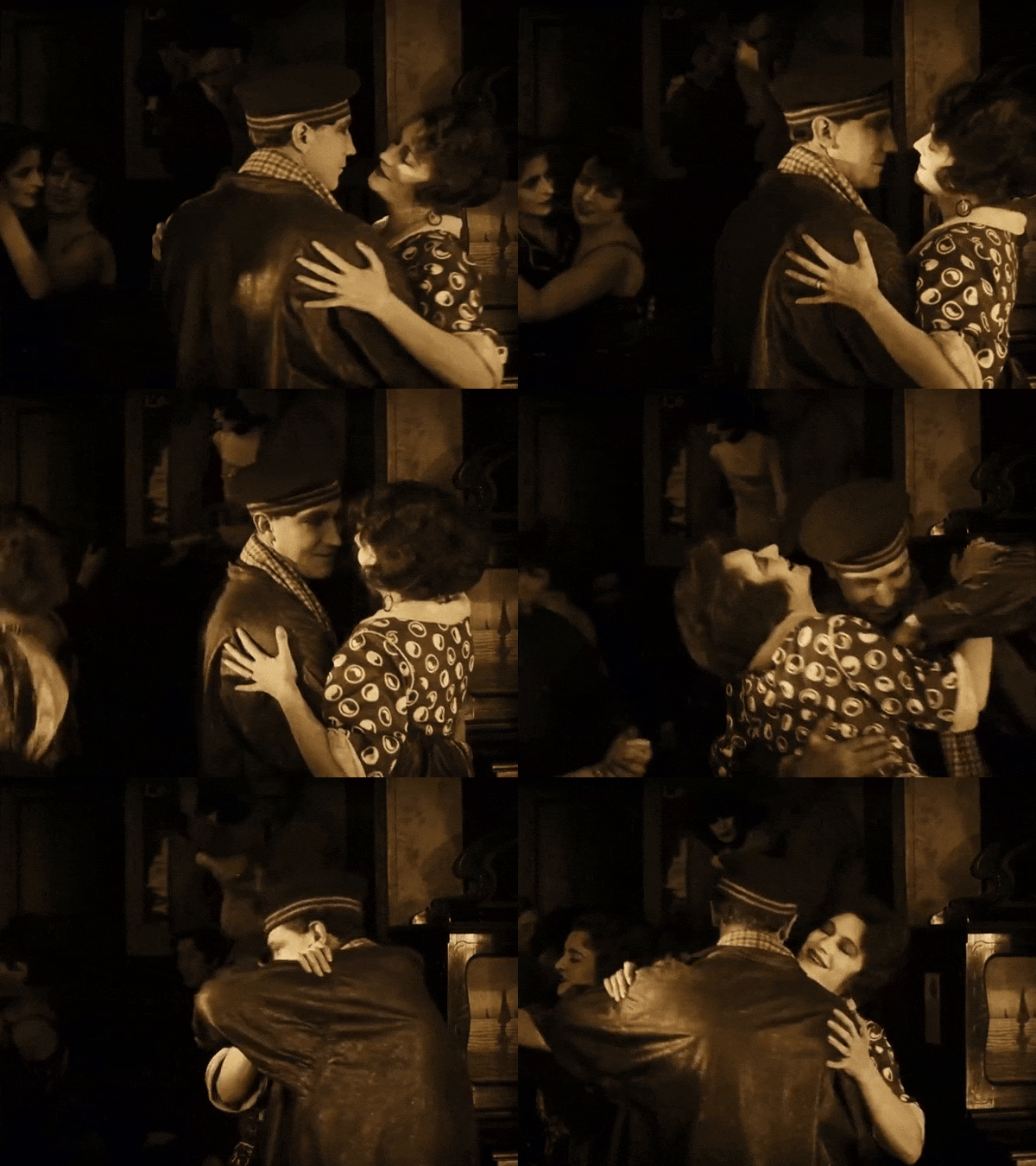
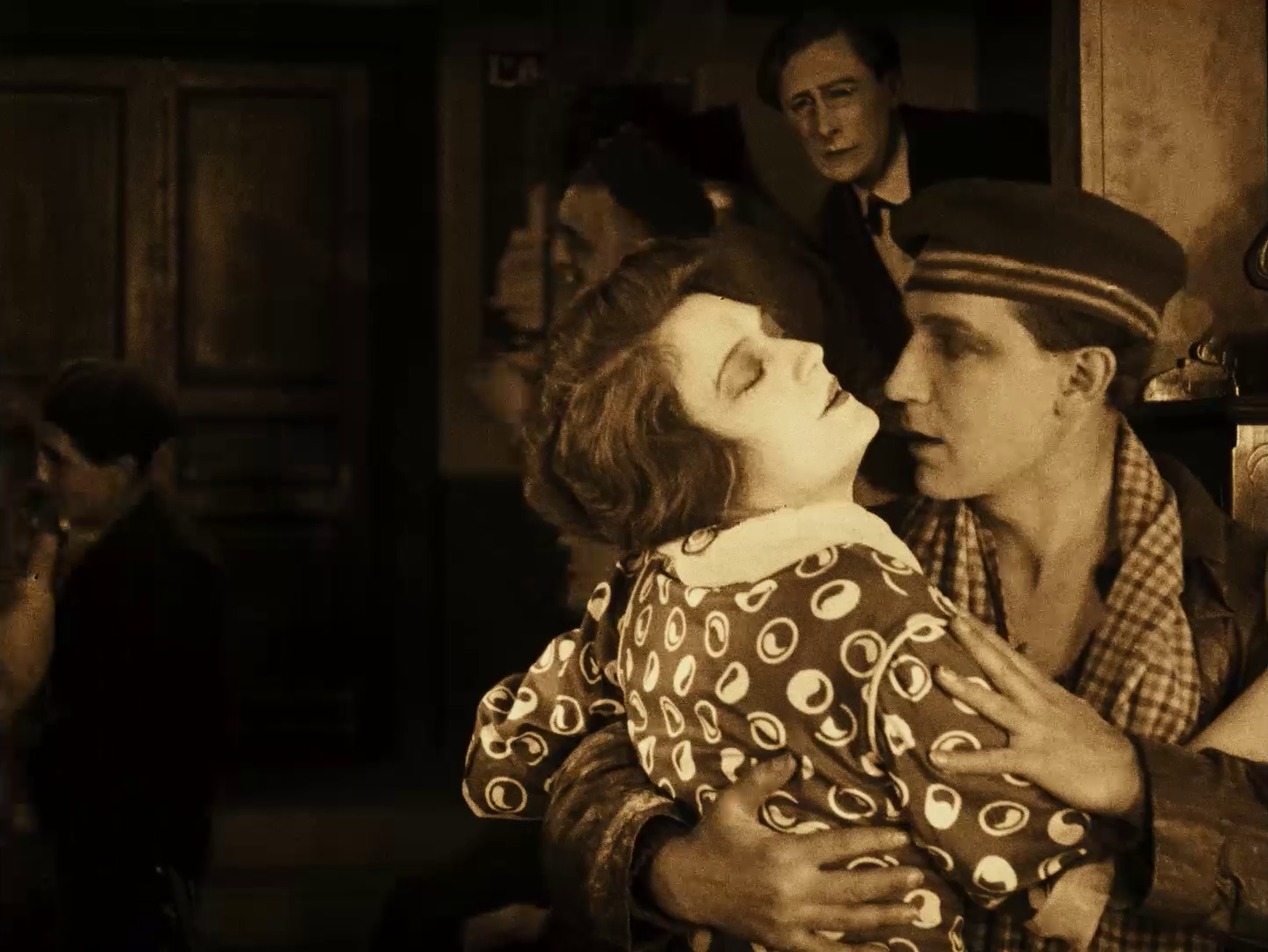
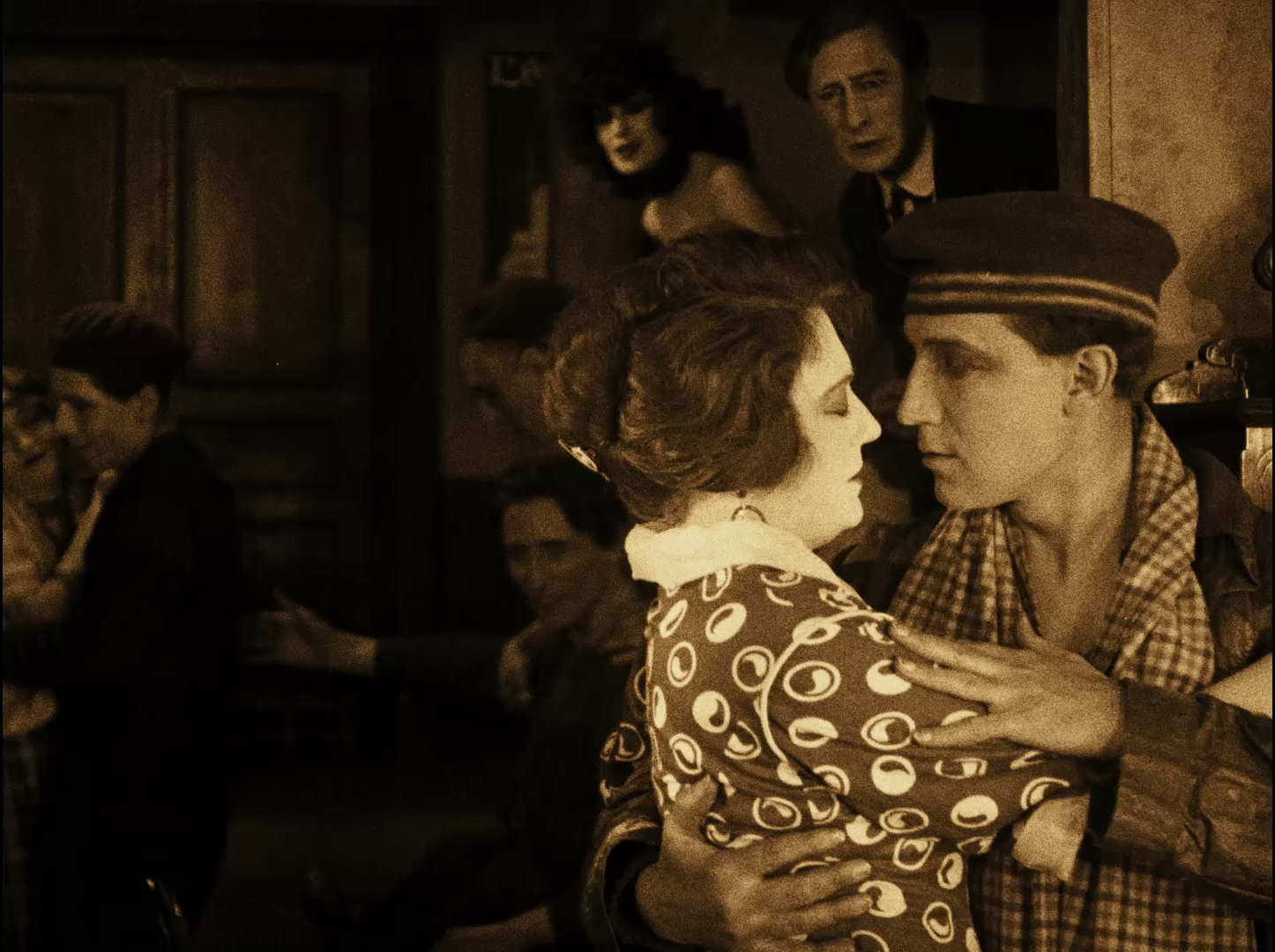
Against the backdrop of the dancing couples, Militis finally approaches her and seductively leans in close, his hands barely tucked in his front pockets, giving her the look she fell in love with all those years ago. Fully aware of his intentions, she seems to relax slightly, and we can catch a glimpse of her smile from behind. He coaxes her into a dance by wrapping his arm around her waist. She swings her head back in disbelief that she's even humoring him and this dance. He swings her around and rocks her while never breaking eye contact. She hasn't fully given in to his advances just yet, fully extending her right arm to prevent him from fully enveloping her. Militis holds his hand out, and without any hesitation, she takes his invitation and grasps it.
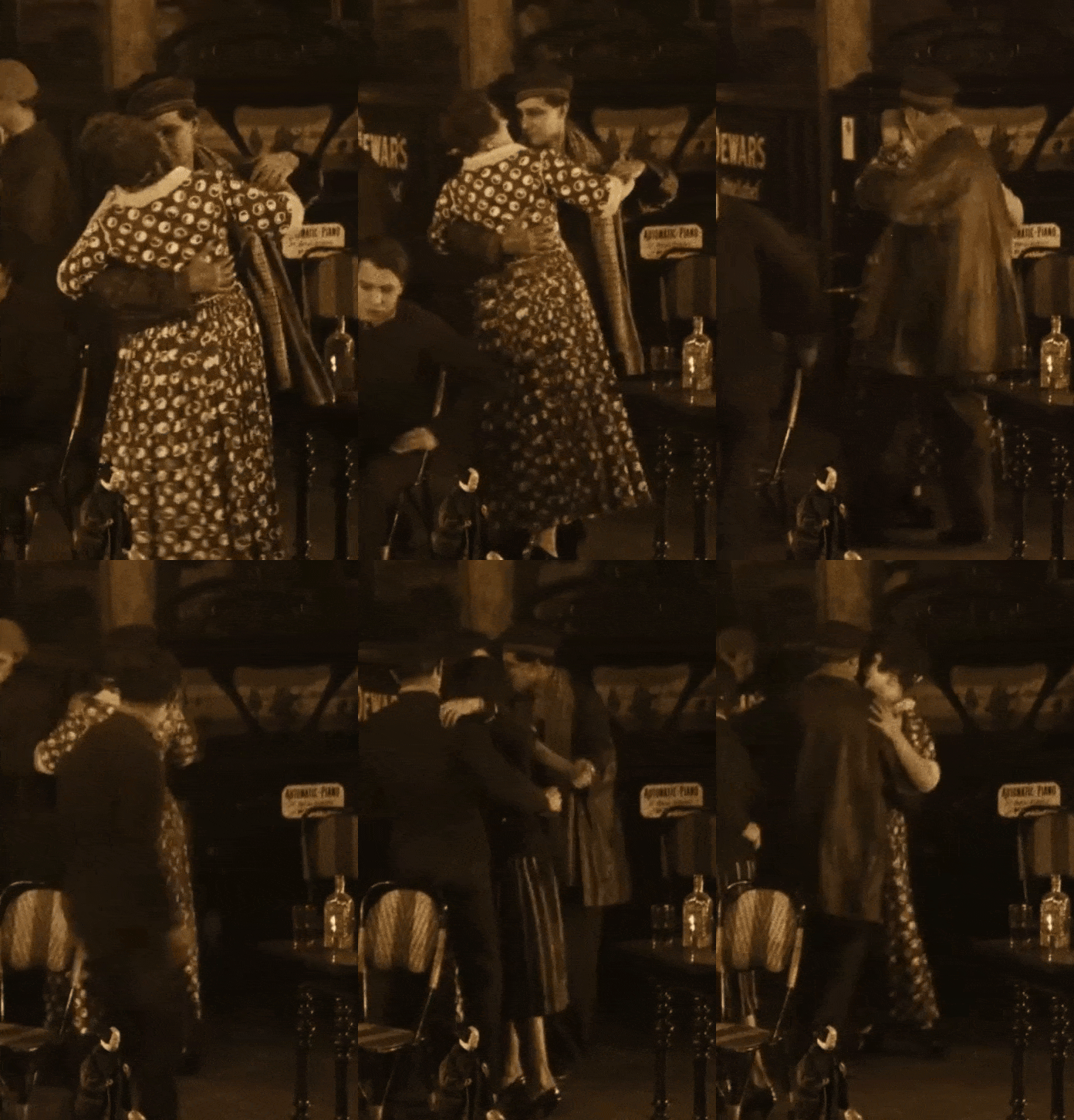
What begins as an awkward dance soon evolves into one of rekindled passion: she clings to his shoulders, their faces buried in each other's necks, smiles and stares they once shared a lifetime ago resurfacing. Militis asks if she loves her husband. She smiles and responds with a question of her own: "And do you love your wife?" The two share a laugh and continue their dance with a greater passion, their movements more flirtatious. She kisses his neck, prompting him to suddenly stop the dance and ask if she would follow him. Confidently, she proclaims, "Whenever you want me to." She smiles and Militis holds her tight as they resume their dance.
The Aftermath
What follows is a series of dramatic events ultimately ending in tragedy, set off by the jealousy of two men -- Sarah's husband, Topinelli and one of the card players. I've neglected to mention several details because they mostly exist to move the plot along in the final act and don't interest me too much in this write-up, but I'll see it out to the very end.
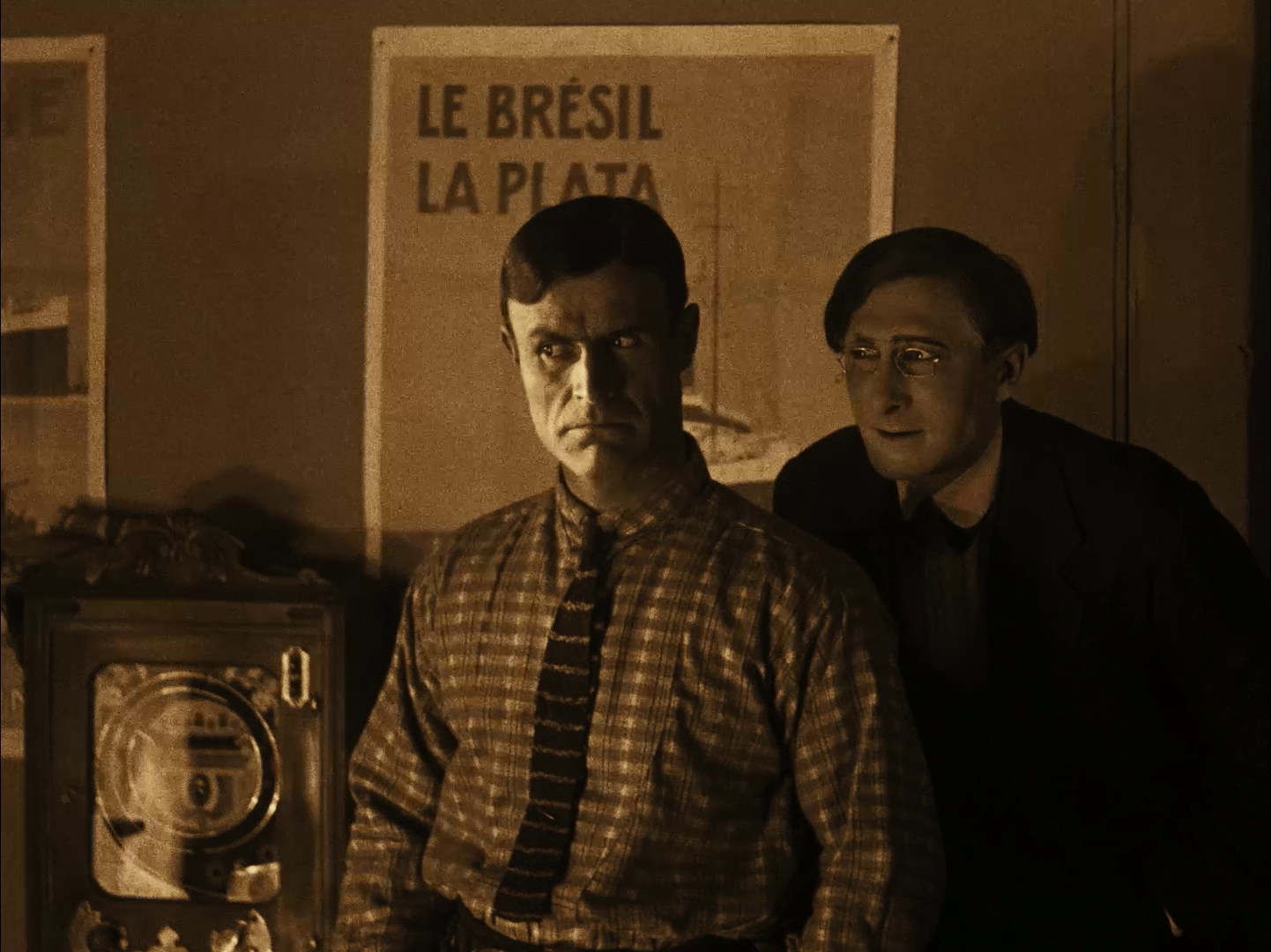
A prim, proper glasses-wearing card player -- named the "Little Civil Servant" -- has his eye on Sarah very early on in numerous scenes, even showing an obvious physical attraction to her when she pulls up her socks next to him and playfully (perhaps even subtly flirtatiously) bumps into him with a big smile before carrying on with her work. He continues to watch her from afar as she steps into the storeroom. Noticing his persistant stare, she teases him with her bright smile. Taking this as a sign, he hesitantly follows after her and attempts to make a genuine physical advance, but she pushes him away and laughs, not taking the actions of a drunk man seriously.
Much later, the Civil Servant watches in anguish throughout The Dance. Consumed by his jealousy, he hides in the shadows of Sarah's husband and warns him to keep an eye on his wife.
Meanwhile, Militis' wife, still enamored by the shining flower on the counter, crawls towards it, but the cigar-smoking card player stumbles into her and attempts to lift her to her feet. Militis sees this and assumes the man is harrassing his wife. The two men engage in a short-lived scuffle. Sarah tries to stop Militis, and in his seemingly intoxicated state, he overpowers her and carefully pushes her out of the way.
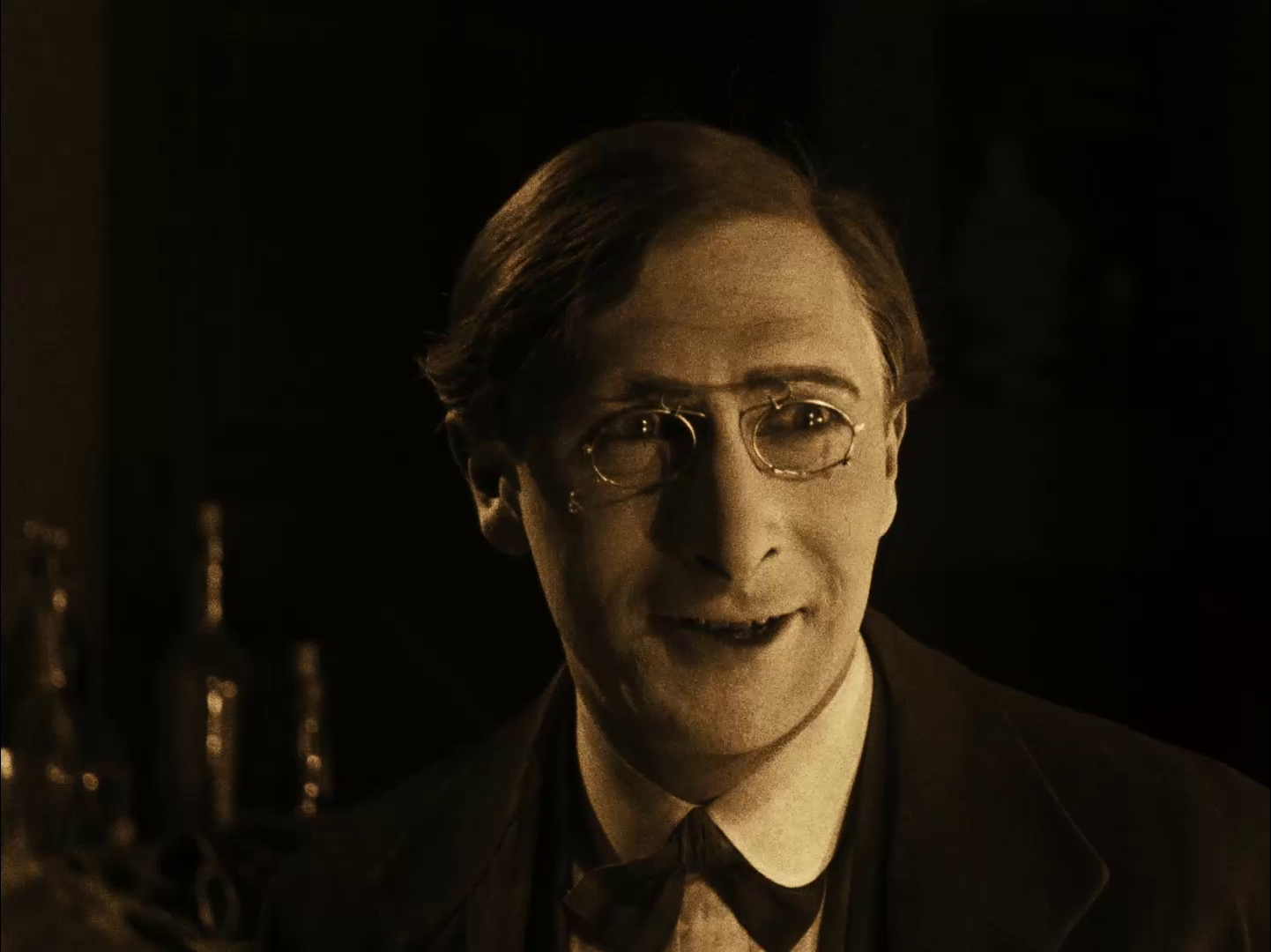
The Civil Servant's vindictive eyes light up as Topinelli finally makes his move.
He accuses Militis of bullying women. The dancing comes to a halt. Not humoring him at all, Militis steps away, but Topinelli doesn't take this well, and the two men begin exchanging blows.
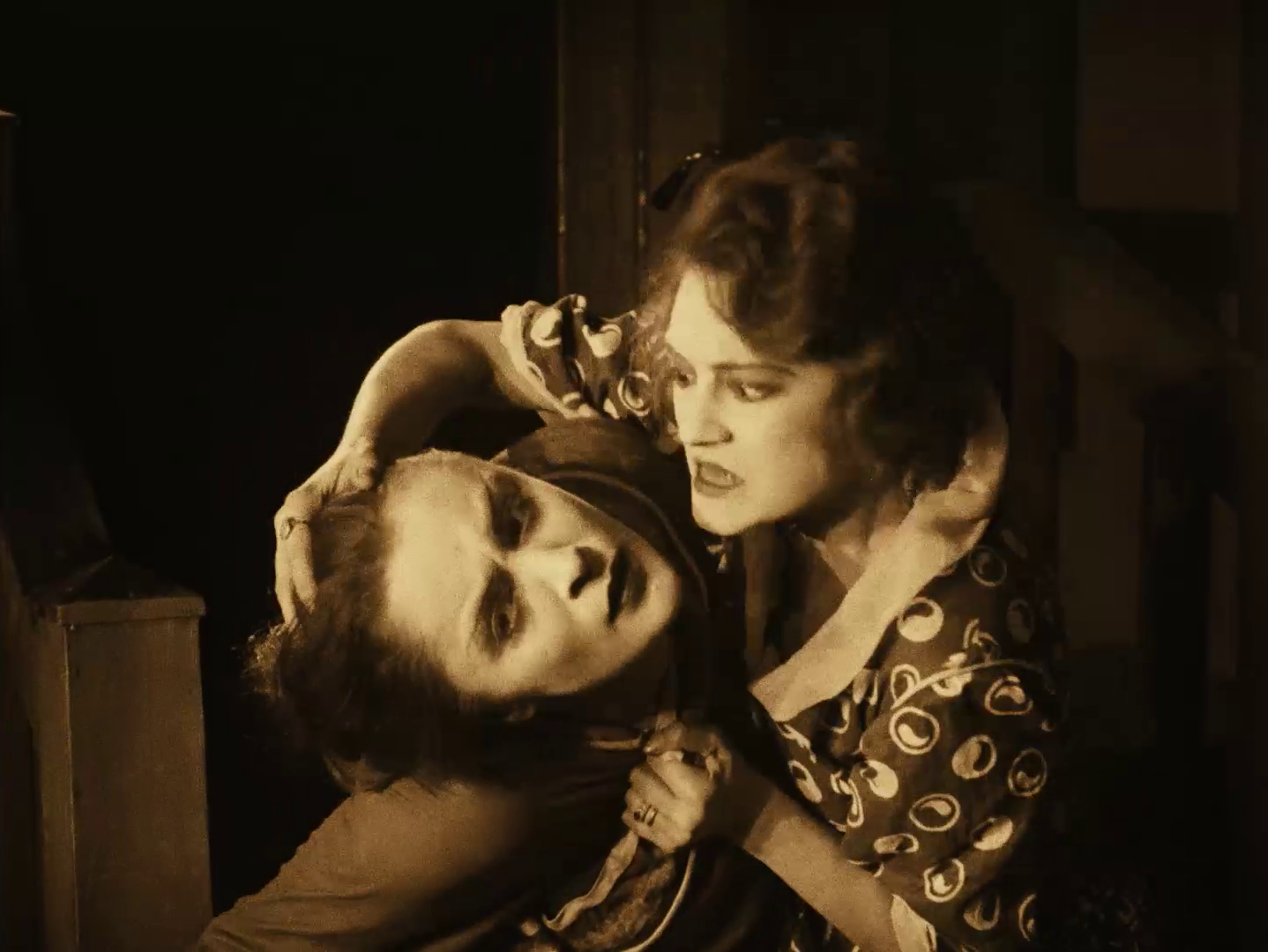
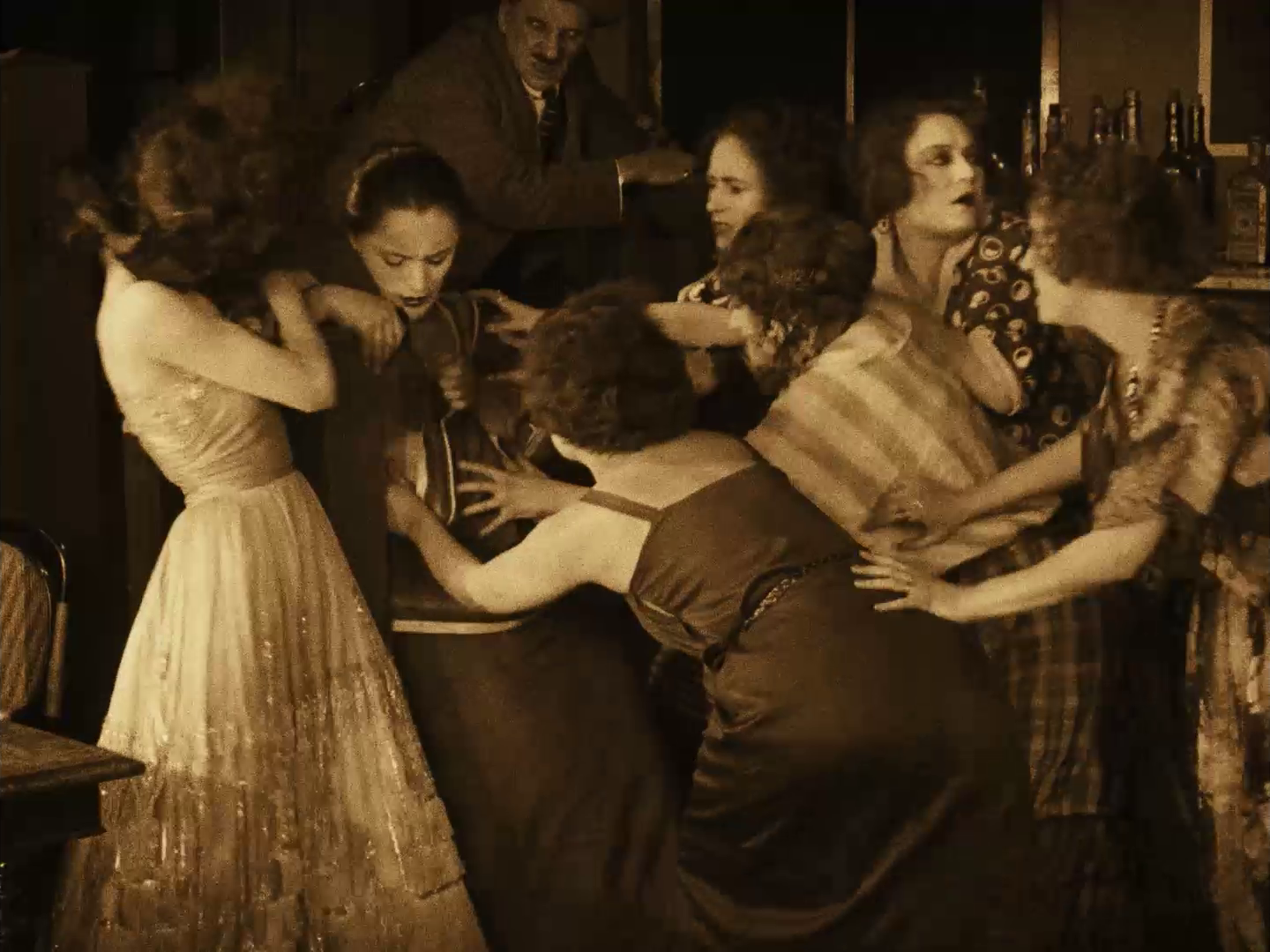
Tensions are high all around as Sarah turns to Militis' wife. Her feelings get the better of her, years of resentment rise to the surface, and she becomes physical with her, gesturing toward the fight between the two men as if it were all her fault. Sarah calls to the prostitutes for aid, and they begin to savagely grab hold of her, even attempting to tear her clothes off.
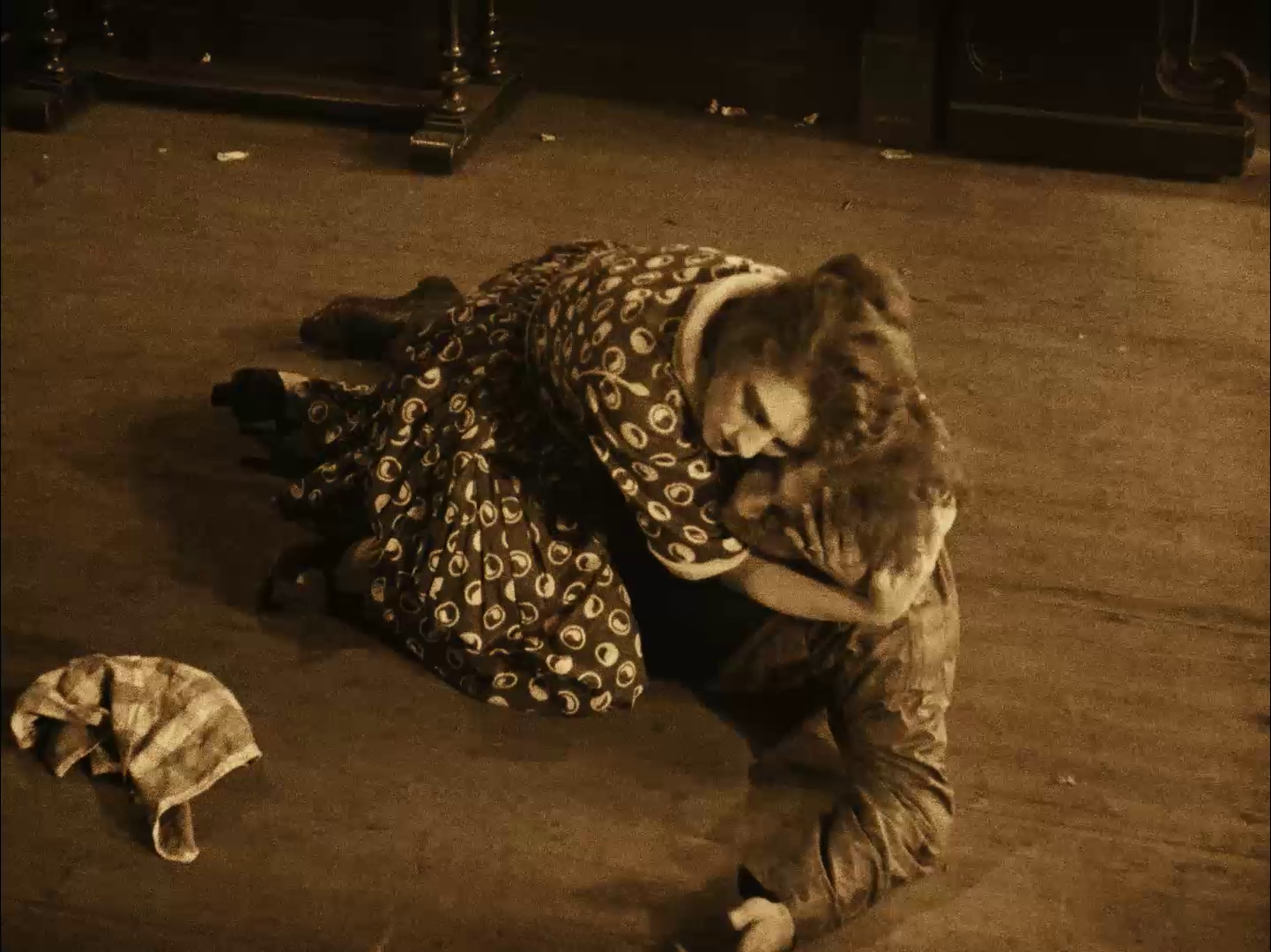
The fight between the men ends when the Civil Servant, wielding an unclear blunt object, cracks Militis over the head. Staggering, Militis falls to the ground, and Sarah rushes to his side, clutching his head to her bosom as he struggles to stay conscious. Chaos breaks as the sailors gang up on the Civil Servant. Topinelli looks down at the lovers, and Sarah cries out to him, "He was the one I loved!" Enraged, Topinelli presses his foot down on Militis' neck, and he dies. Sarah screams.
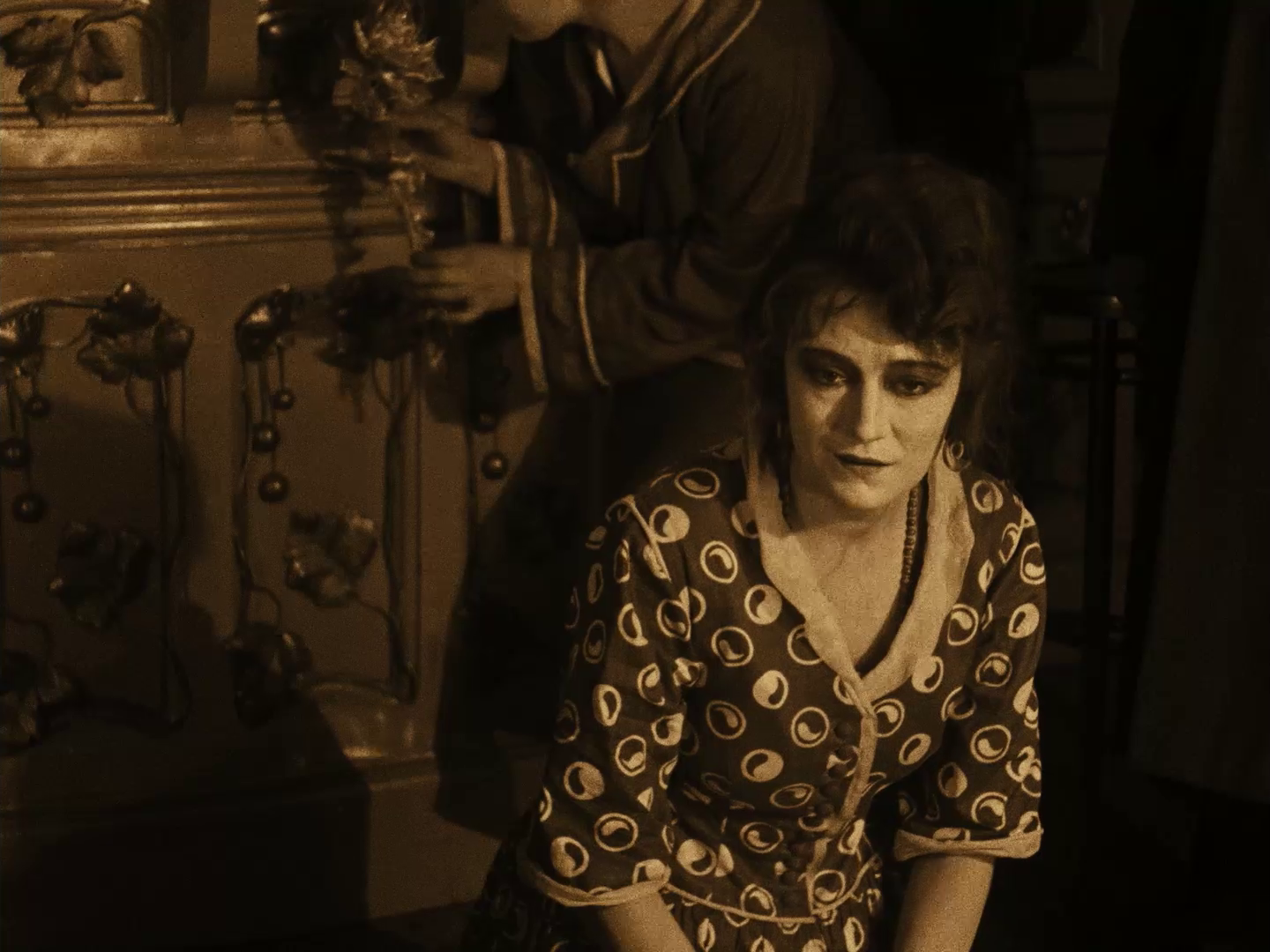
Topinelli runs into the storeroom as the sailors turn their attention toward him, but it's futile, they break in and beat him unconscious.
One of the prostitutes announces the police's imminent arrival, causing both prostitutes and sailors to rush out of the building. Militis' wife once again turns to the shining flower and finally approaches it, taking it out of the vase and studying it. The police enter and conduct a lazy investigation, only asking the Civil Servant who is to blame. Still bitter over it all, he points to Sarah.
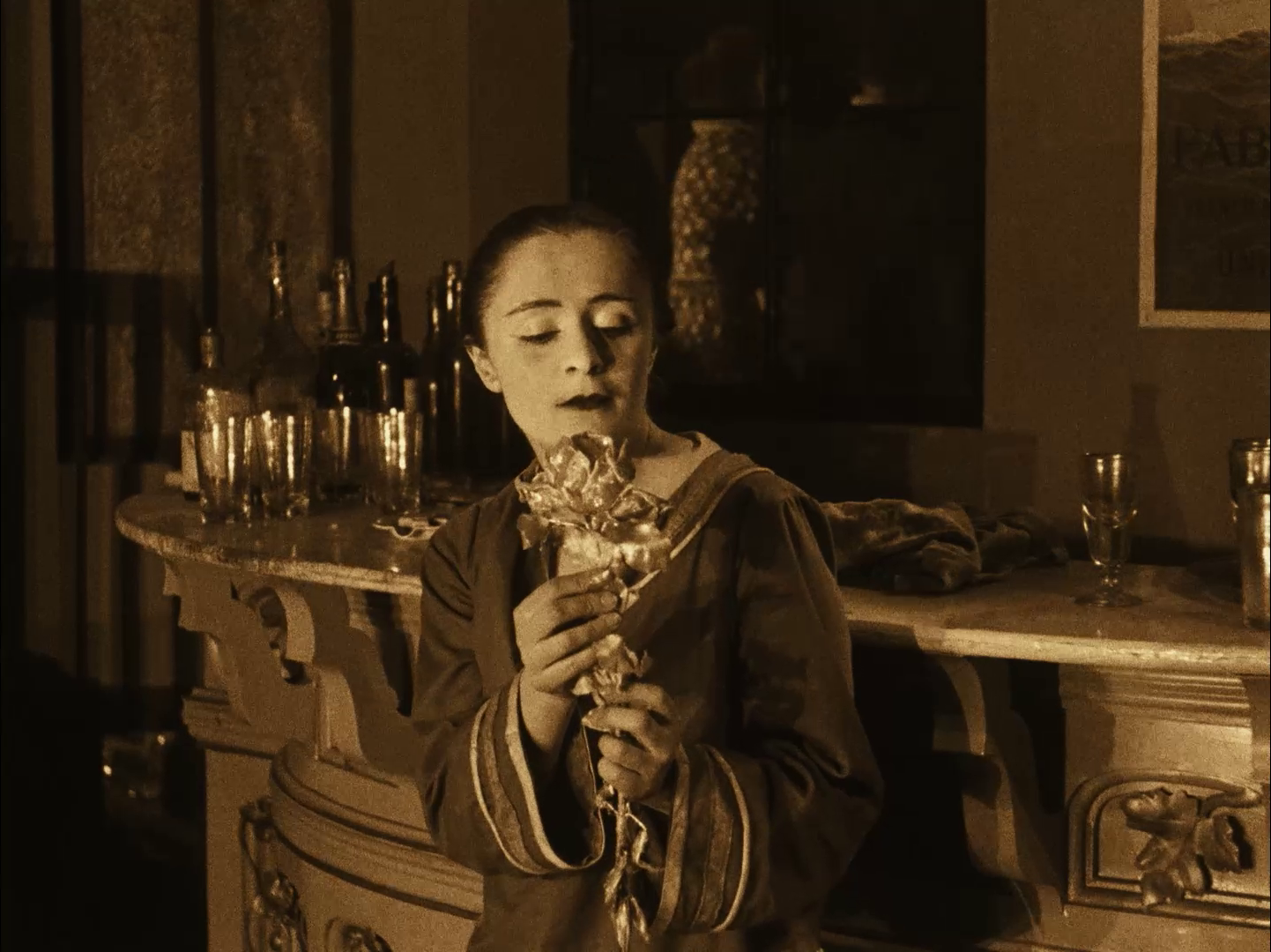
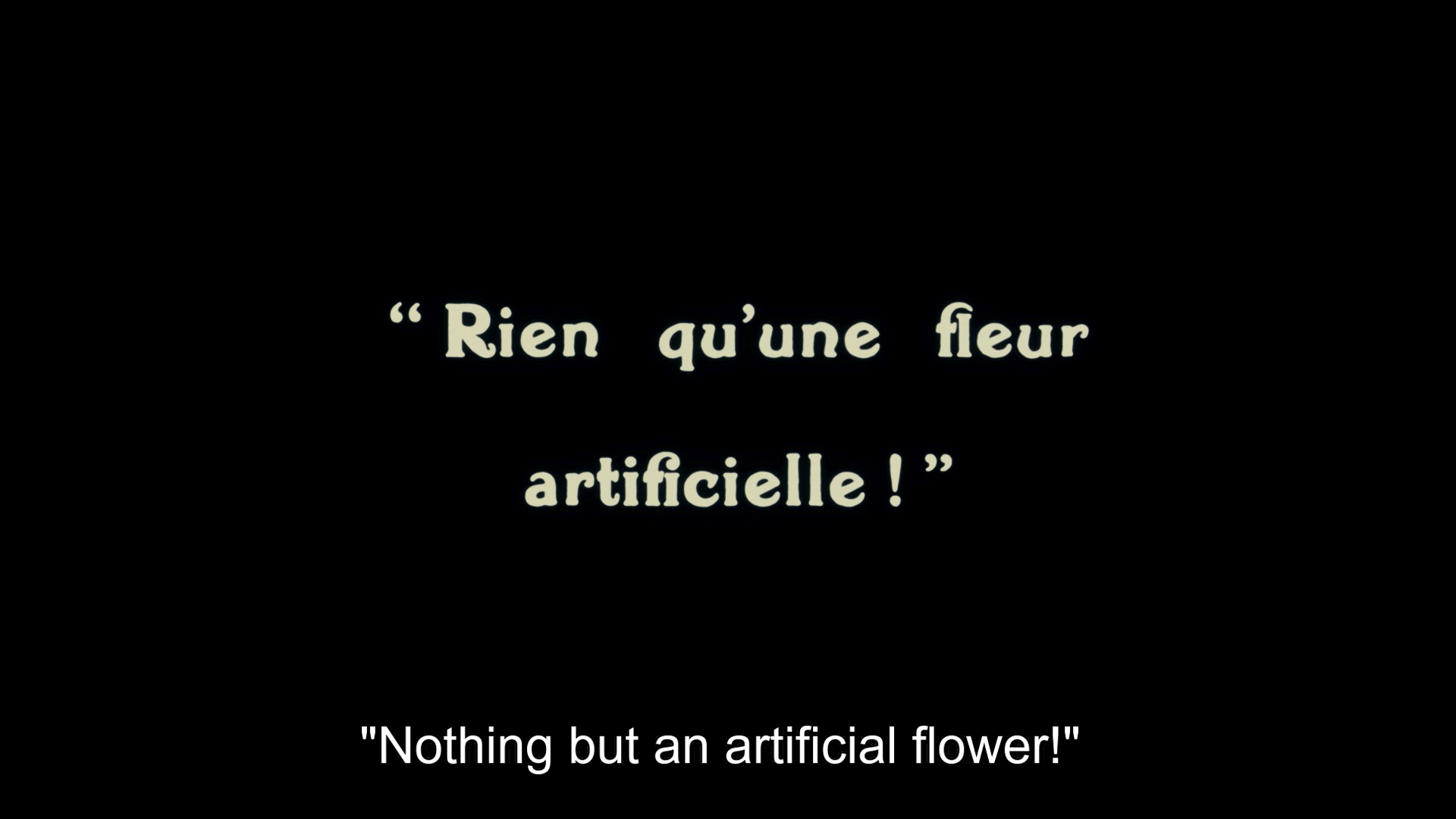
The police approach her, and without any words, she understands what is about to happen. Defeated, Sarah says goodbye to her lover before the police escort her out of the building. Militis' wife looks deeply at the shining flower, holds it close to her nose, and takes a deep breath only to find no scent whatsoever. The long sought after flower, the only true thing of innate beauty in this dump of a cabaret, is only an illusion of beauty -- a mockery of it.
Afterthoughts
I ask that you forgive me for mostly writing a very detailed synopsis and doing very little examination or analysis. The truth is, I don't have anything truly insightful to say about this film. Instead, I wanted to take a moment to appreciate the small details that may have gone unnoticed and overlooked. I think it's exceptionally well done and surprisingly well designed and composed for a film that was still deep in cinema's infancy, when much of the visual language and shorthand that we're accustomed to had not yet been developed or widely used. And yet, it's clear the film doesn't really need it. I'd argue that its sparse use of closeups works in its favor, this allows us to take in the full scene through wide shots and highlights the theatricality. All sense of natural rhythm and energy would be lost if, in the editing, they broke up the larger dance scene into a dozen or so smaller shots dedicated to highlighting both inconsequential and important moments taking place concurrently in the foreground and backround. I'm sure it could work in the hands of a great director, but what I'm not sure of is what's being gained in doing so. Any change would make for a very different scene and, ultimately, a very different film.
It's difficult to write about this film and do it justice because it's deceptively dense purely on a visual level, with an extraordinary amount of information being fed to the viewer through full use of the foreground, midground and background. If it is possible to write about the subtle details of Militis and Sarah's dancing while seamlessly mentioning the Civil Servant's pained, jealous gaze behind them (all within the same shot and frame), or how one of the card players takes an interest in the Pipe Woman while Militis and Sarah dance in the midground, then it may very well be beyond my capabilities as a writer. But I think that speaks to how meticulously designed and crafted this film is. It's a deeply compelling depiction of life. There feels to be an almost incomprehensible amount of moving parts occuring simultaneously, all with their own stories -- some less impactful and eventful than others -- but all unraveling before our eyes if we only turn our attention to them.
tags:
#theater / #2025